Categories
Belief and Philosophy Blog Divorce Reading & Writing Self-help

Writer’s Block (an excerpt from Write Your Divorce Story)

Writer’s Block

When my lawyer asked me to deliver the story in a few weeks I easily agreed, but when it came time to begin I procrastinated. I told anyone who asked that I was spending all day writing, but hours would pass and all I would have were a few hastily written words and doodling. I drank lots of coffee. I tried different pastries at a new cafe down the block. I listened to Oprah Winfrey podcasts. I watched YouTube self-help videos and every single one made sense to me, a clear sign that I was not listening to any of them. I scrolled through job postings. I didn’t write.

Writers call this writer’s block. Writer’s block translates into this: you would rather do anything other than write for any number of reasons. I think of writer’s block as a pause, a break prior to sitting down and writing. Anything can be accomplished in the stead of writing, but my personal favorite is dabbling in a myriad of small busy tasks and errands such as, oh, making sure that there are an even number of chopsticks in your kitchen drawer. The point is busyness, not completion. Instead of writing, I went for a month to high intensity training classes where I lifted sandbags and collapsed on a sweat-drenched stinky mat. My child observed me from the sidelines and told me I was the second worst person in class. I coped with my severely grieving child, wrote a book proposal (no sale), desperately looked for employment, planned an inter-island move, emptied the contents of my apartment, procured new housing, bought a car, shuttled the kid to lessons, and learned the rather complicated process of transporting rodents (pet guinea pig) in containers between islands. 

I spent considerable energy mitigating my soon-to-be-ex’s attempt to seize control of our jointly owned property thousands of miles away. I noted the lack of safety bars on my windows prior to his arrival to sign papers and pondered various arguments that might lead to an unexpected drop from an open window. Since divorce is a worst-case scenario, you think in such terms, and my anxiety refused to be quelled despite my counsel’s pragmatic take that my death would be inconvenient for my ex, and therefore unlikely. My Hong Kong lawyer repeatedly advised me to update paperwork to transfer my share of the home to my parents, so that in case of my death before the sale of my house my interest would be safeguarded for my child. He was quiet when I asked him why he advised it, and simply repeated his concern. He repeated it at least three times. Maybe four over the course of a week. Yet I could not muster up the energy to go through a title change. I was still reeling from the physical effects in the run-up to the final days before the divorce: strands of white hair appeared, my left hand could not stop shaking,  my eye seemed to permanently twitch, and insomnia was perpetual. I called my lawyer from a parking lot of a hiking trail about some paperwork issue, but was so frazzled I couldn’t track what he was saying, and asked him to repeat what he said at least three times before crying in the parking lot. He commented that I was not in the best mental state and that I would have to count on him to move everything forward and I agreed. I changed the locks, moved into my mother’s apartment, got a prescription for sleeping pills, and dropped to the skeletal weight I last claimed after a bad case of bronchitis in the run-up to my wedding. 

Was I writing? Nope. How could I write it? I was living the nightmare! Never mind writing about it! Why was I being asked to write this! What? This was worse than a dissertation! The story remained unwritten. Nothing was more unappealing than writing the narrative of how I got to this position of near-collapse. Days, then a few weeks passed. I would start, then stop. I was so bereft and adrift that I did not know how to begin to write what I knew even then, was the most significant story that I had lived in my adult life. How could I encapsulate my lived experience in mere words? How was I to possibly condense the most significant and turbulent relationship of my adult life into something manageable and readable?

An excerpt from WRITE YOUR DIVORCE STORY. This is a prescriptive non-fiction book designed to help you author your divorce story. You can use this for your legal file and/or your personal record. Write your truth to power and author your life. Register at drstephaniehan.com


Categories
Belief and Philosophy Reading & Writing Self-help Teachers THROB

THROB The Hawai’i Review of Books: Let’s Start with Death

This is my second column for The Hawai’i Review of Books! It’s called The Doctor Is In and in this space I will answer all questions regarding writing, process, creativity, and literature. Go ahead: shoot me a question! Email me at word@drstephaniehan.com or go to my CONNECT page on my website.

Categories
Belief and Philosophy Educators Self-help Teachers

Master Kang Rhee and Memphis

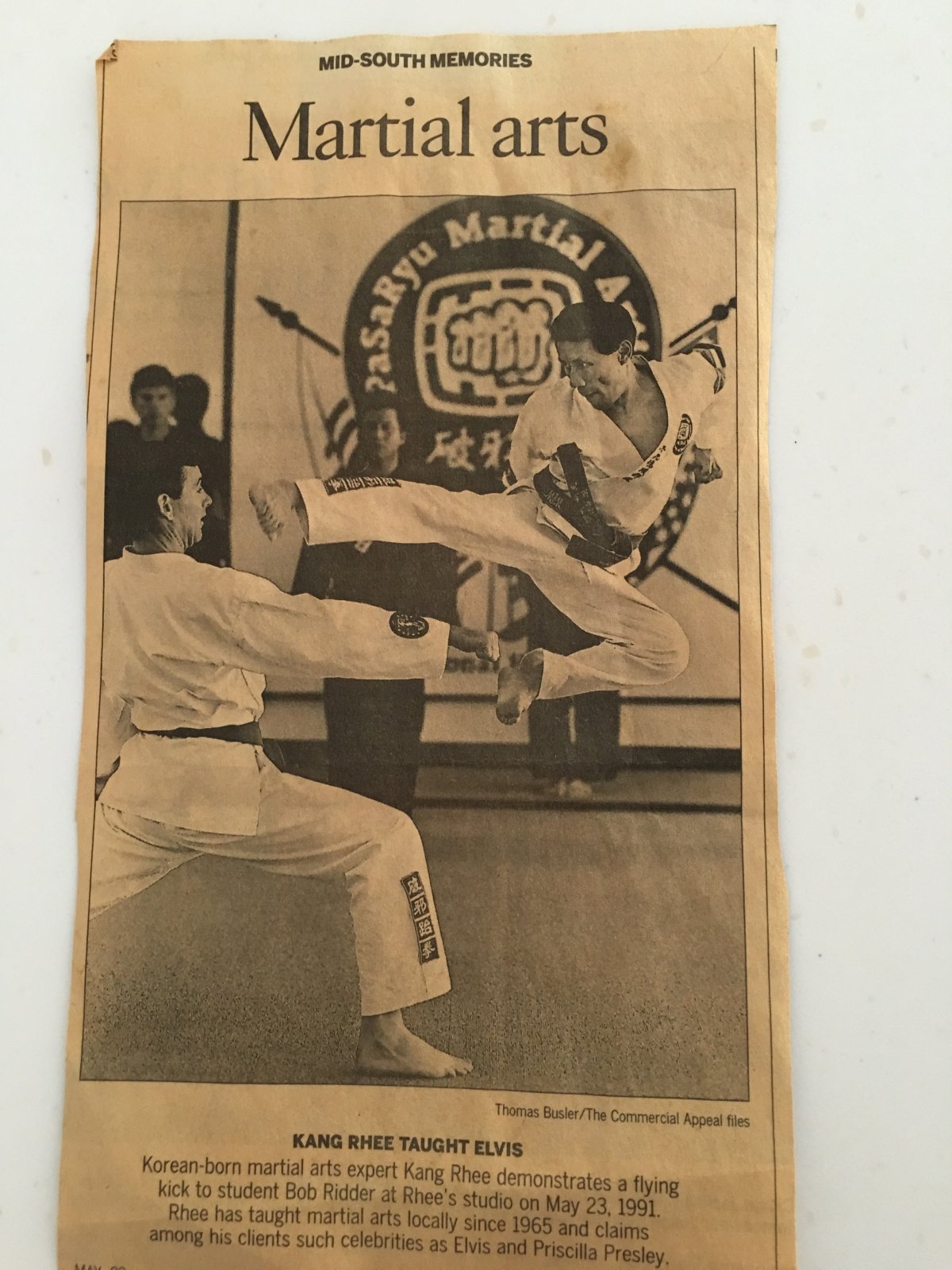
My father’s cousin was Kang Rhee, the founder of Pa Sa Ryu and the Kang Rhee studio in Memphis. Kang Rhee is known by many for having taught Elvis Presley. If you ever see a picture of Elvis with an Asian man in front of a Cadillac–that’s him! Elvis Presley gave him a Cadillac. What’s interesting about Memphis is that nearly every person has some tale about Elvis or Elvis proximity. For example, my dentist was asked to be the Graceland dentist and he told me, forget it, he didn’t want to be called to do teeth cleaning at midnight! With Kang Rhee, my family has an Elvis story too.

Yet there is a story about Kang Rhee that I think is broader than the Elvis story. This is about how culture moves across communities and the merits of small businesses and how they influence and change lives. Kang Rhee had a studio in Memphis near downtown. Legend had it when he first arrived in Memphis, around 1964 at the invitation of a US military person he had trained in Korea, he knew only two words: “Follow me.” And follow the people did. He told me coming to the US was a dream. He had to leave the mud. The mud was everywhere, he said, shaking his head. Post war Korea. He arrived in the US and drank a whole quart of milk in one go. He ate fried chicken. He rode a bicycle as he didn’t have money for a car. He began to train people in his Korean style that he established as Pa Sa Ryu.

He was on the martial arts circuit with Bruce Lee and one of the first to bring the art to the West from Korea. He performed in Madison Square Garden. Back in the early days, I heard his studio was racially integrated but mostly men. By the time I went, it was a family operation with all kinds of people — men, women, kids, of various shapes, sizes, shades and whatever. It had moved from downtown Memphis to a Collierville mall. Tourists from all over the world would come to buy pictures of Elvis and take photos of Kang Rhee.

There was a period of time when I lived back in Memphis, took some classes, and the only thing that kept me going was Kang Rhee’s classes. I was deeply depressed, but going to the studio once, sometimes twice a day helped me get better. Kang Rhee gave me a new narrative about how to approach life. To pass the tests we had to memorize sayings and practice with others; we had to feel purposeful in our craft and respect the art.

Significantly, this was an environment that was Asian in nature–of course! It was led by a Korean American and while he was a deeply devout Baptist, the fact is that his students understood that they were studying a Korean art form.

I know at one point, when he brought back the study of Tae Guk from Korea, 101 moves to enlightenment as taught to him by a monk practitioner, and encouraged his students to study this–to learn breathing and flexibility, many of his black belts defected! This to me, was a terrible example of what can go wrong when people fail to respect cultural art forms. Kang Rhee never asked anyone to worship in any particular fashion, ever. Those people lost out. Not sure how they are breathing and what their flexibility is like, but that is their loss. So yeah, heads up people, hate to break it to you, but Christianity is relatively new in East Asian terms–try several hundred years, and mostly in the 20th century, not a few thousand like various indigenous spiritual practices. You need to calm down and remember, that no one is asking you to worship a particular god if you practice a martial art, but such forms cannot trace their roots to Christianity! I think we need to have better history education in the schools…

To conclude, Memphis remains in so many ways,  a racially divided city, but within the context of these classes, this was not so. There are still martial arts instructors with schools, black and white, who studied with him that run businesses in Memphis.

He was one of the most important teachers I ever studied under. Do you remember any of your teachers? Why? Who were they? What do you remember? Thank you, Master Kang Rhee, my uncle, my cousin. Thank you.


Categories
Belief and Philosophy Blog Educators Reading & Writing Self-help Teachers Woman. Warrior. Writer.

Wearing Glasses

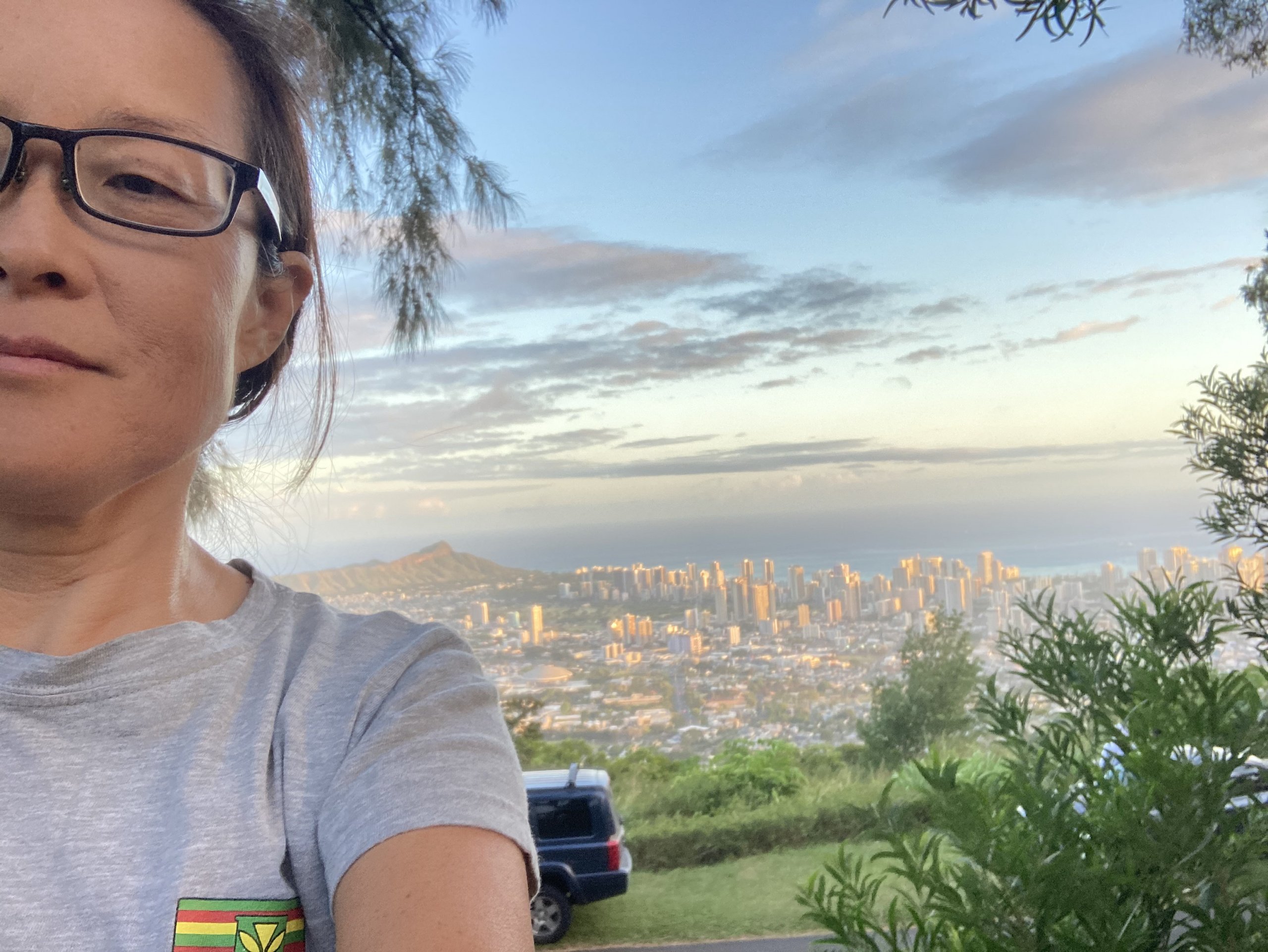
I try to wear my glasses as much as possible in photos to encourage girls to wear glasses. I’ve been wearing glasses since I was 8 years old in the 3rd grade. I distinctly remember excitedly telling my friend that I was going to get glasses; she did not share my enthusiasm. I was so happy to get glasses! My 4th grade picture is me in gold wire frame glasses with tape. Dad did this for me. Years later Mom laughed and I said how could you let me walk around with this tape on my glasses. Dad said it was perfectly fine and good that I made do with those glasses. At the time, I was pleased he fixed my glasses in this way. I had no idea I was living out the Asian nerd social misfit stereotype. Both Mom and Dad wore glasses. I think to some degree, we were a family of nerds, so no one cared and it was about fitting in with each other rather than the outside world, which is often what close family dynamics are like.

The summer of 7th grade I got soft contact lenses. It’s a miracle I didn’t develop a massive eye infection. Every now and then my mom would ask if I was sterilizing them, which for me at the time was throwing the entire case with saline it it into a big pot of boiling water. I said to her, oh yeah, I did it. Haha. You know, like I kept up with all of my grooming, like washing my hair. I will not describe in detail the day the flakes of dandruff came out from my comb, but it would be fair to say that I was not the nicely groomed 7th grade girl all the time. Yes, there were times when I went through some greasy haired grubby moments. I wore a hat on those days. Ick. But telling the truth here…

The thing that I enjoy about NOT wearing glasses is feeling free of the sweat on your nose, which is why, even if I have and wear sunglasses, I’m not always keen to do so. I’m at the point where I need glasses over my contacts, and with the prescription this or prescription that I have a lot of different kinds of glasses that I am circulating between for near and far sightedness, for sun or not in sun. I have terrible vision.

Many young women students refuse to wear glasses in my classes. They squint, they simply feel too self-conscious to wear them. I reveal to them what a friend who wears glasses told me: women who wear glasses usually fare better when asking for raises or negotiating financially. After I heard that one I wore my glasses all the time. Not sure what study there is on this, but hey, it can’t hurt. I also told the girls this. Can’t say that more of them wore glasses, but maybe in the future.

To those who teach young girls and wear glasses: Wear them! With pride! With joy!

Categories
Belief and Philosophy Blog Divorce Passing in the Middle Kingdom Poetry Reading & Writing

How I Began Passing in the Middle Kingdom

I began writing what would become “Passing in the Middle Kingdom”, an unpublished poetry manuscript I started the summer of 2008 when I moved to Mui Wo, Lantau, Hong Kong from Los Angeles. The manuscript was a finalist for the Wilder Prize and most of the pieces have been published in various drafts. It is a very clear document of the collapse of my marriage, the longing for clarity, the fatigue and joy of early motherhood, and the desire for home and belonging.


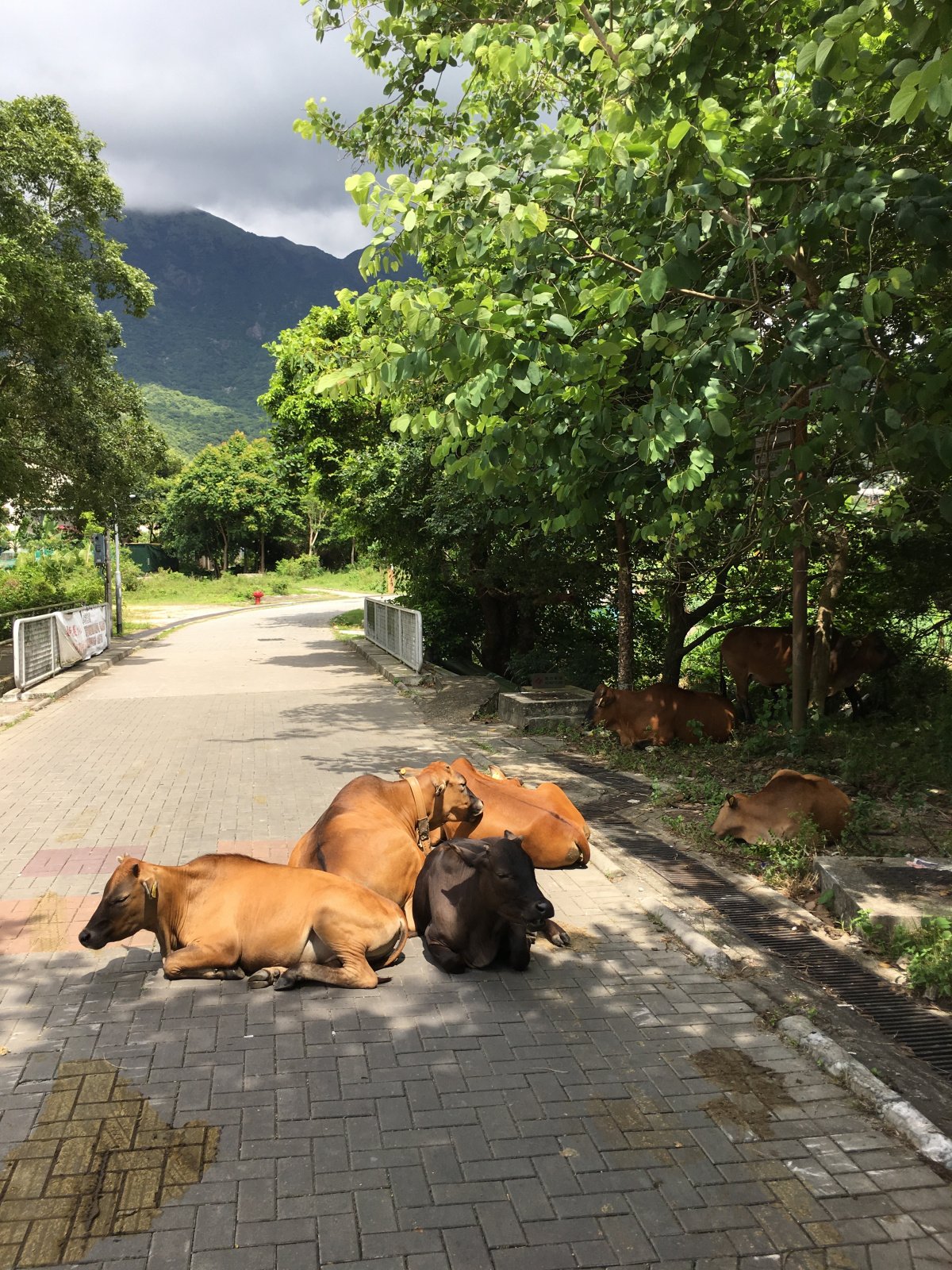
At the same time I wrote the poems I had kept a blog. The blog became quite popular showcasing a bucolic lifestyle that seemed strange for people to have in Hong Kong. Blogging was new back then. The blog was a marked contrast to my poetry. We are always more than one side. I think of it as the simultaneity of joy and sorrow. The wicked hope for deliverance. Those early days in Mui Wo were a time of turmoil and indecision. I was hopeful that life would unfold in a way that I see now, is most ordinary, but also for many, including myself, terribly elusive.

The poems came from a place of uncertainty and hesitation, a moving into a foreign space both literally and emotionally of motherhood, marriage, and Hong Kong, and the very real necessities of compromise, self, and longing. While I consider myself to be fiercely devoted to narrative and fiction, it is always to poetry, and its somewhat fluid space that I return when I have no words to express my feelings. Poetry clarifies surface ambivalence to reveal the ferocity of who we are and how we dream. Poetry is highly subjective, very much dictated by personal experience in what we cleave to in terms of style and reading preferences.

I wrote this manuscript when I doubted my very existence as a writer. I wrote this after I declared I would quit writing. I wrote because I could not stop writing.

My child was about 15 months and not yet walking when I showed up in this small village off the South China Sea. I had lived in Hong Kong prior and was very reluctant to return. I wanted an oven. I didn’t want to live in a high rise. I also got seasick from ferries so didn’t want to live on the Outer Islands, but with an oven and no high rise that was two out of three, and I learned all sorts of ways of battling seasickness and came to ride the ferry into town with relative ease.

My father accompanied me to Hong Kong, and after a few days of wandering the village, translating the Chinese characters and nodding at the scenery left me with this advice: “Keep writing. Your child will leave you. All children leave.”

As my father pulled out in a taxi to head to the airport, I could see the barest expression of worry on his face. He had escaped the postwar blight of Korea and had succeeded at every turn. He had a research career, chaired a division, provided for his family, and lived out his Confucian obligations. For what! His own American born daughter, given every privilege in the world had angrily rebelled against absolutely everything and had nothing to show for it except life in a small flat in a rural village with water buffalo ambling down the path and a spouse who had barely made a living in the US! America! Nightmare! I cried when Dad went and then there was me and the keyboard, and so life began in Luk Tei Tong, Mui Wo, Lantau, Hong Kong. Such is the tale of migration and family.

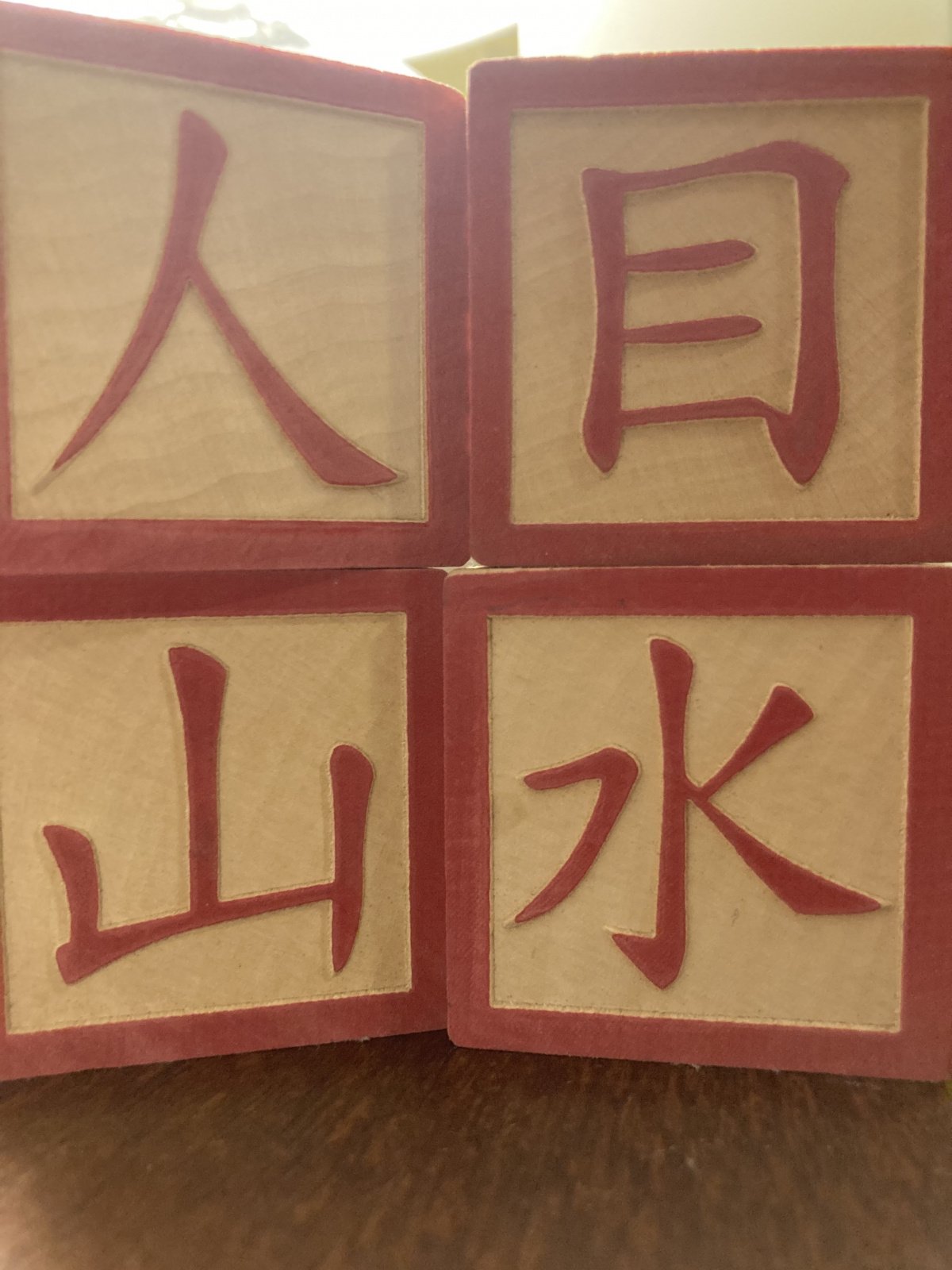
This piece “Expatriate”  was written after we had moved to a new house in Sun Lung Wai. I had started my doctoral studies. I had made an uneasy peace that I would be spending my life in Hong Kong. I felt extremely isolated. I was not an Asian language speaker and on my mother’s side, was far more deeply rooted in the West Coast and Hawai’i. I was Korean, not Chinese and the cultural differences between the two are wide. My appearance suggested fluency in an Asian language–I had none. I was an Asian woman married to a white British man and with this were a host of assumptions–mostly, that I had elevated my social being by marrying someone white. I found this offensive. I wasn’t a banker and wasn’t much of a shopper. My sister once said she hated going into malls with me because I start to act weird, and for the most part, she’s right. I’m not my best self in a mall. If I get too absorbed in the dynamic my breath can even become short, I get lost staring, what starts as a 15 minute journey ends up being hours long and I become overwhelmed. There are many malls in HK, but luckily for me, there were no malls in Mui Wo.

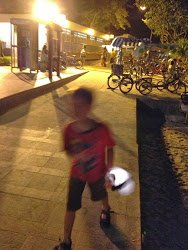
On this day of the poem I distinctly remember my son was wearing his preschool shirt from the local village school. We were walking with a helper, one of the many Filipina and Indonesian women that serve as the engine for Hong Kong’s middle class households with their labor and time. My son hated going to Chinese school, though to some degree, he got through a few years. When they announced exams for those who were age 5  it was time for him to be pulled out! I thought he would spend his entire life in Hong Kong. He moved West at the age of eight, although Hawai’i is arguably not what people conceive of as the West at all. And so, another generation of migrants in my family. The truth is now he will look back and search, not for the land I had left behind–the US, but the land he left behind–Hong Kong.

Within this idea of home was the memory of the cornfields, seas of them, going on and on. I spent seven years as a child living outside of Iowa City where I went to church, looked up at the stars, and wished for nothing to change, so aware, as young children are, of death and inevitable loss. Anyone who thinks young children don’t think about death has not spent much time with young people.

I have never lived in Hawai’i permanently before I relocated part-time in 2015, full-time in 2018. It is where my mother’s family landed in 1904 and yes, it is now home.


Expatriate

I amble up the path,

follow a beauty crinkled by a jealous sun.

She pushes a cart of pried up puzzle pieces,

grows rubber trees, dreams of birds’ nest towers,

and money pouring into golden cups.

I close my eyes to palm trees, smell the green.

The day’s heat stalks.


A flash: cornfield carpets,

gray barns praying to cerulean skies.

Heavens split: pearly clouds stream a god

I abandoned the further I moved from home.


My child scales piles of rubble:

Careful. Watch the cart!

I remind him snakes lurk beneath trash.

He bounds ahead, fast-fast

to the only home he knows,

a village I made his world.


One day he will search

for a land to belong to,

in quest to discover

all known and left behind—

a place, pencil mark, country,

a dream existing

only in the memory of why.


Categories
Belief and Philosophy Educators Reading & Writing Teachers

Adventures in Teaching and Girlhood

In the spirit of uploading content on a daily basis my recognition that this will take more than I had planned out, I will be excerpting my manuscript Passing in the Middle Kingdom, explicating the story behind the poem in hopes that people might be encouraged to scribble their own. I’m a believer in creating text and how this can change your life. I began writing this collection of poetry/prose, a type of hybrid work, honestly, in 2008. That’s right. It’s not 2021. It’s been rejected by many people. It also has had nearly all of the content published and the manuscript itself was a finalist for the Wilder Poetry Prize.

I’ve taken one poetry workshop, but my most acute memory of studying poetry was in high school. The most intense moment from that class was writing about my racial identity, a poem called Barbie Wish, and me praying like anything as the teacher read the poem out loud that people would think it was the other Korean American girl. Not me! LOL. I have a lot of fondness for that teenage girl who wrote that and know what it takes to write that stuff. When teenagers write their truth to power, faculty should stop shutting them down. I can’t even tell you how many people shut young students down.

Adventures in Substitute Teaching

I had the opportunity many years ago to substitute teach at an orthodox Jewish girls school. The girls were pretty out of line–I’m not sure where you get the ideas of behavior drawing down ethnic lines because these white wealthy Jewish girls were standing on chairs, shouting, being totally out there! I had them write something creative and this is when it got interesting.

They were sharing and reading it out loud when the headmistress came in for a visit. One girl was reading her story which involved working as a spy, parachuting from an airplane. She apparently spent the summer living a life straight out of a Bond movie. It was fantastic. All the girls listened: glued. Headmistress walked in to listen. After it was over we’re clapping and headmistress yelled at the girl for LYING! She said, you must tell the truth! The truth is that you went to heritage camp and met other Jewish kids and sang around a campfire. Or something like that. The class went silent (myself included, I was smiling and enjoying it the entire time, until Bummer Boss Headmistress walked in).

I was very sad for that girl. After school I did a brief one-on-one meeting with the headmistress who complained that the girls were so out of line she couldn’t get anyone to take the full-time job because they kept quitting. She was so frustrated and said that thank god, that after they all got their periods they calmed down. Or is it that the community further squashed their lives to the ground? Hard to say. I could see the big thumb smashing that girl’s imagination out of her brains right then and there! You think headmistress might see the connection between silencing the girls and the girls jumping on chairs. They were running around in their ankle length skirts and yelling outside having fun. But it was clear that once they got their period, the big headmistress rules would reign. People make excuses in the name of culture, but they need to cut it out. All cultural expectations and rules are rooted in patriarchy which is tied to silencing women. Don’t dream! Don’t make up stuff! Don’t imagine a new world! What a great imagination that young girl had. I’d be surprised if she was able to rebel, but part of me hopes that one day she will think about that huge tale she spun that day in class, the headmistress yelling and just maybe, think about what she used to dream about–jumping out of planes, working as a spy, living a life that everyone around her wanted her to deny.

I hope that parents register their daughters for girls’ creative writing classes this summer with Reema Rajbanshi grades 11/12 and

Ishle Yi Park grades 9/10!

My desire to see girls respected and their imaginations encouraged was partially a result of what I used to see in classes. These are fantastic women authors and writing instructors who will encourage your daughter to write imaginatively and beautifully.

Register at drstephaniehan.com