Categories
Belief and Philosophy Blog Educators Hawai'i Self-help Woman. Warrior. Writer.

Hawai’i: Family

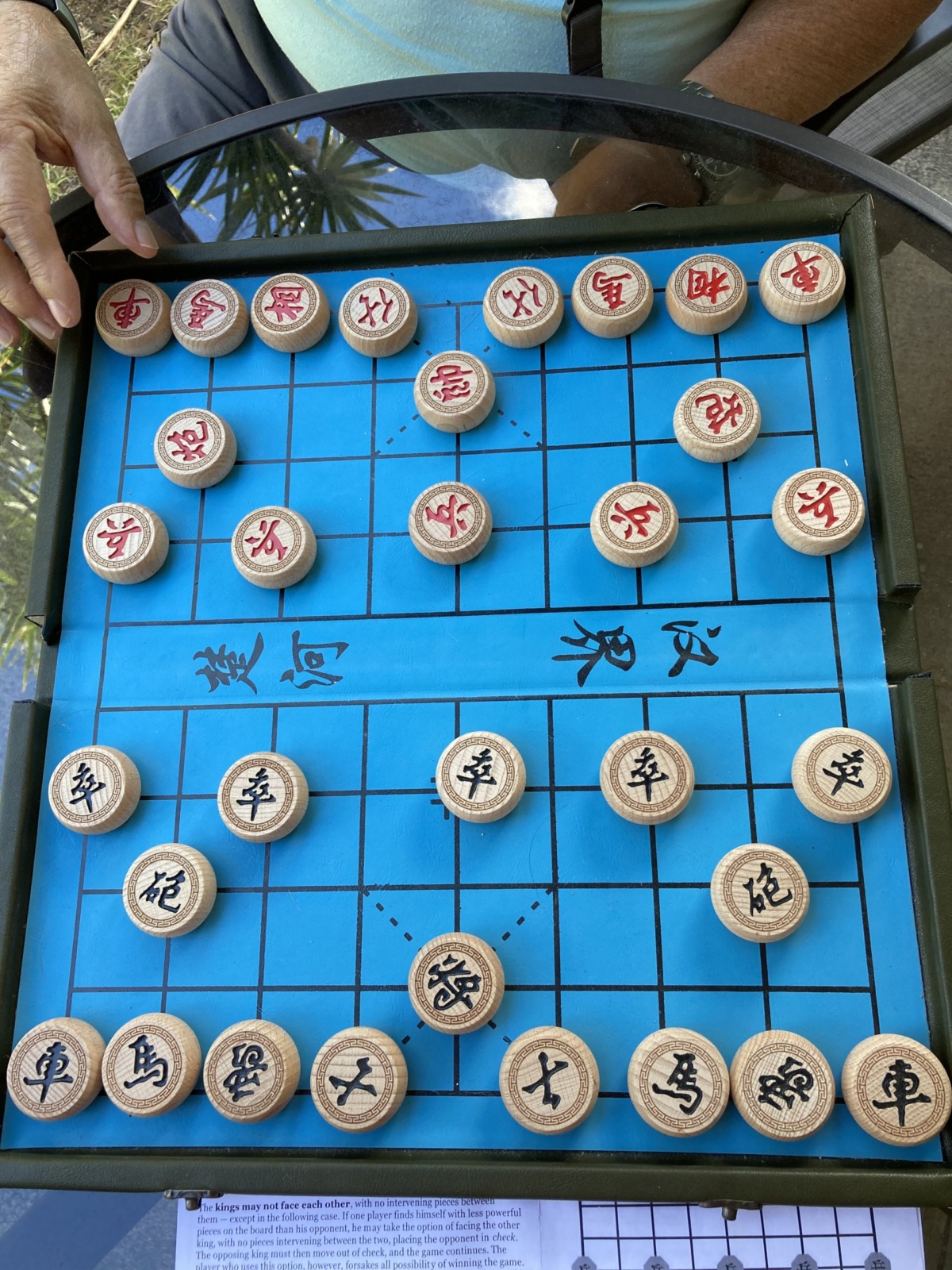
I’m starting to learn how to play Chang-gi/Jang-gi or Korean chess, or what some may call Chinese chess. I’m doing this, so that Dad and I can have some activity together. The Kid and Dad played 5-in-a-row. Dad can beat The Kid at this game. He’s also good at chess. He told me this is how he spent part of the Korean War with his brother and cousin, hiding in the attic to avoid being drafted as a young teenager, the three of them playing chess.

I first learned to play chess in the third, maybe fourth grade. A friend taught me and failed to tell me that losing the pawn was not as bad as losing a rook and she easily won for several rounds. I developed an interest in playing chess, enough to have Dad come home from a business trip with a small magnetic chess set. I still have it. He learned Western chess; we played together. My ambition became to beat him.

I played other Korean boys in Iowa, most distinctly one who won against me with a series of memorized moves. I was in awe. I asked him how he learned chess, and he showed me a chess book. I went to the mall, ordered the same book, Dear Reader, I still have it, LOL. I studied it, and then memorized the moves. I got better. I kept playing. I didn’t ever play the boy again, but I ended up challenging Dad to chess and beating him.

I beat him once, but obviously, he was the person I wanted to win, as I didn’t play much after that match. Dad laughed. I had taught him now to play Western chess, and he had always beaten me up to that point. Looking back, I know he had let me win, played a bit casually, but no matter. I felt like it, and he admitted it: I had won.

So much of my identity throughout my life was tied to being my father’s daughter. The daughter of a scholar and research scientist and doctor. The daughter of someone who had survived the Korean War, who had won the nation’s top scholarship to come to the West, who had a PhD and MD by the time he was 27. He headed a research lab. He was the only person of color with his field’s medical association. He was a colonel in the Army. He published over 200 papers. He spoke multiple languages. He lived a big life. Mostly, he was unique, unabashedly exhausting, often temperamental, humorous, brilliant, and fiercely loyal. It was under this shadow that I lived and tried to measure myself and my accomplishments, and of course, I always came up short. I still do. The complications of his existence were exacerbated by language challenges and his struggles with the truth of race in the US. Dad’s journey was long. Difficult. In almost every sense, it was my mother who made his navigation in the US possible (more on Mom in my next post!).

Dad was the one who had always drilled into my brain that I had to have more, be more, accomplish more, to be treated with half the respect, as he said, because I was Korean, because I was Asian, because I was female. This was the lesson that my father kept repeating, and this was the lesson that nearly broke me, or perhaps did. (I’m since rather patched together on my merry way…)

I particularly remember these ideas when at boarding school. I would not buckle. No. I would not. Because I was not a quitter. I was the daughter of Dr. Tai-June Yoo and the white students who bullied, belittled, had no idea what I did to reinvent. It wasn’t me who was on the line. It was my race. It was my ethnicity. It was my gender. I would not let anyone down. Ever! Tough times. I got sick of living up to everything–and as one does, it led to completely giving up that type of structural existence. Too exhausting. Too narrow. It did not fit. Even if that meant disappointing Dad.

It took me decades for me to see that there are truths to how we learn and function in a nation and that our families messages are to be interpreted according to who we are individually. We can’t be everything to everyone all the time. What we can be however is this–people who slow down and play a game chess now and then, people who try to learn something new, people who try to understand that our own paths are informed by others, but are our own paths full of foibles, mistakes, joys, and unexpected happenings.

Stay tuned.

Maybe one day I’ll beat dad at Korean chess.

Miracles do happen.


Categories
Educators Hawai'i Parenting Teachers

Hawai’i: Beyond Van Gogh

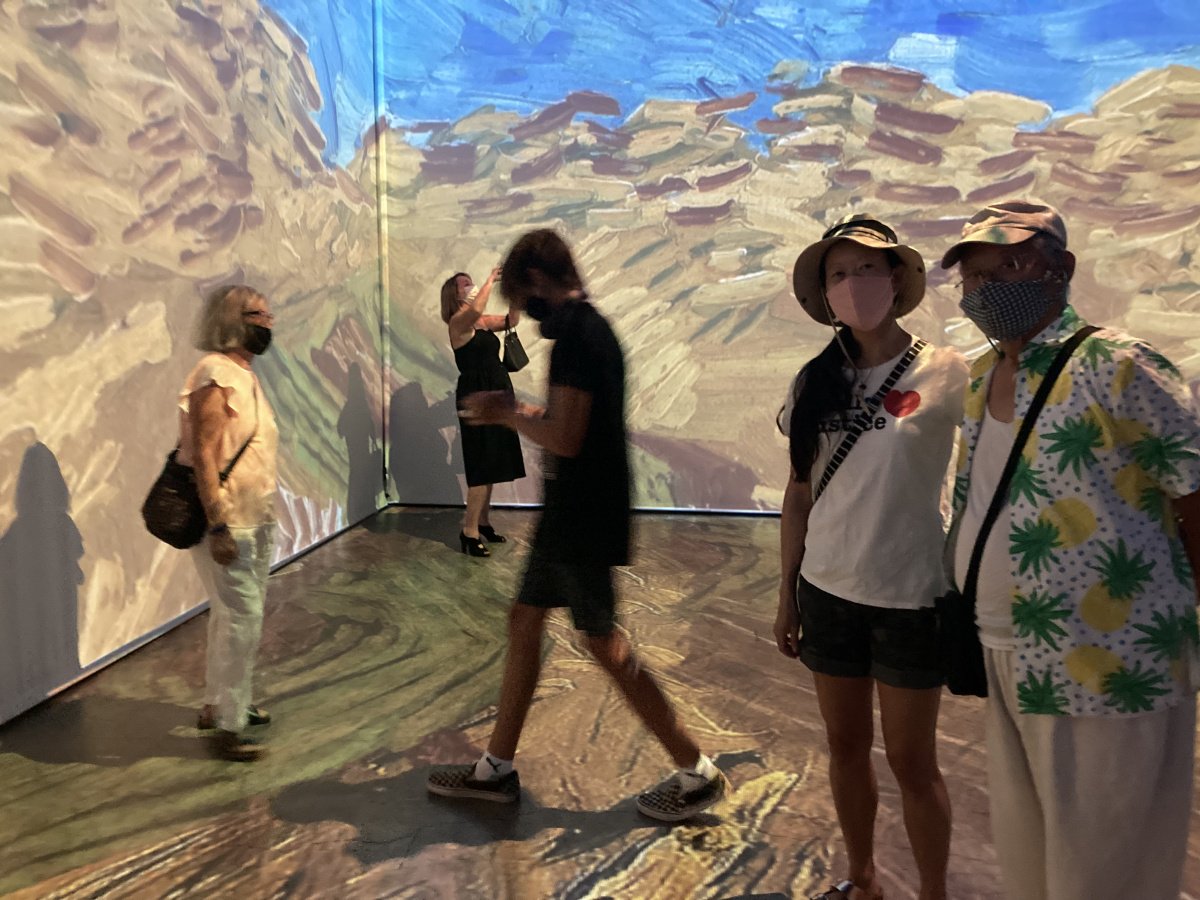
This was a fantastic interpretation of Van Gogh’s life and work. I was thoroughly impressed by how it could engage so many people and inspire reflections about life and art. The Kid and the grandparents, my sister, we all enjoyed it. I’m thinking about how art can be used to galvanize discussion and how exclusivity is never the point of expression. The human questions of belonging and origin are crucial to all of us. Decades ago, I saw an exhibit of his work at the Met. This was an entirely different experience, but distilled the essence of the WHY of his work. Imaginative. Compelling.

I hope that we can see more exhibits here in Hawai’i that are accessible to all ages, and strongly believe that the people of Hawai’i can also export the art and expression that this geographic locale prompts. This is the mission of (THROB) The Hawai’i Review of Books; I am glad to be a part of this endeavor.

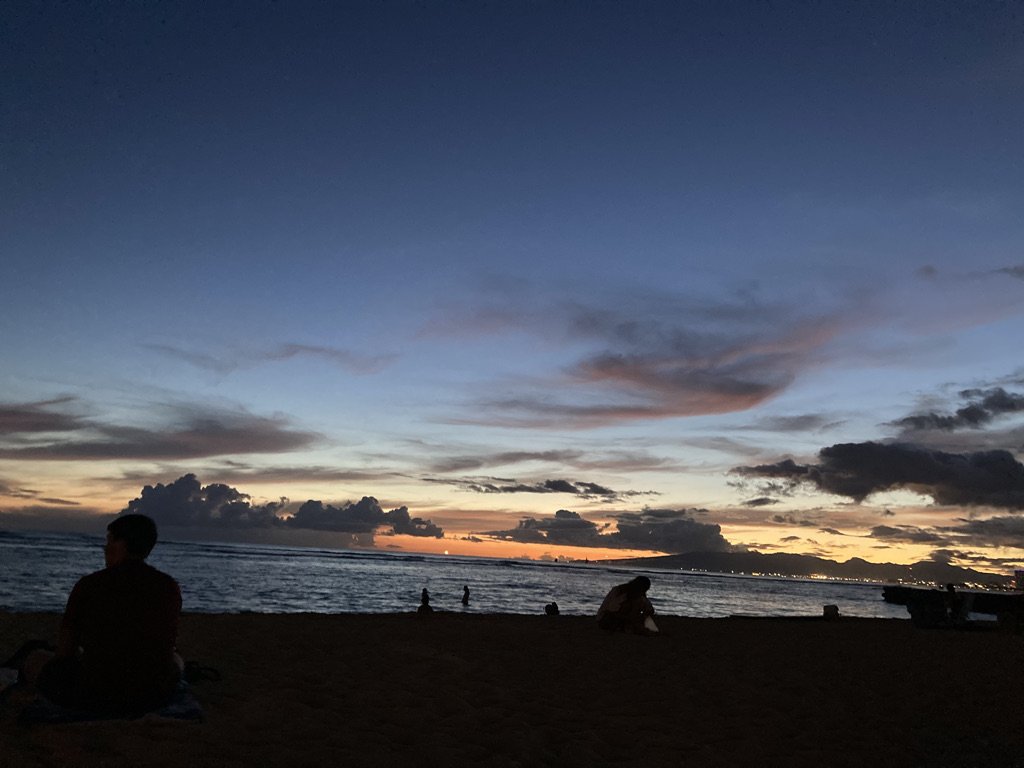
We face challenges wherever we live, but I am always grateful to be living here. There is a reminder here in every gesture, that we are temporal, that nature governs our lives, that beauty and good fortune is in our very existence.


Categories
Belief and Philosophy Divorce Passing in the Middle Kingdom Poetry Reading & Writing Self-help

Passing in the Middle Kingdom: When I Sleep

This poem When I Sleep was first published in an anthology released by the Asian American Women’s Artists Association Cheers to Muses. I believe there are still hard copies of this book available through the organization. Work exhibited or featured ranged from sculpture to prints to writing. We do not create in a vacuum; at any time there are others who are creating, making, and expressing, and it’s important to note that we are not alone in this way. Women who have chosen a path predicated on expression and creativity often find themselves on the fringes of a society, and so it is important to know that you are not alone in this endeavor, that is often looked upon by outsiders as rather peculiar. It’s important to note that there are avenues of art that are always accepted by society should they fall into the matrix of womanly arts–these are not to be dismissed. But when you begin to question existing narrative frameworks art becomes dangerous.

Always remember that writing is a radical act. And as anyone who writes will tell you: writing is not a choice; it’s a compulsion.

I was remembering what a Korean American friend of my sister’s once told her: “Why can’t you just conform?” LOL. This is such a terrifying statement on so many levels. What was it about how this young woman was raised that she would level this type of criticism? Rather terrifying. The world finds so many ways to keep women compliant.

The poem below was a real dream I had many years before I divorced. I was extremely unsettled, filled with anxiety, but it was difficult for me to discern why or how as seemingly, everything on on the surface seemed to be as it should. Child. Spouse. House. Work. Check. Check. Check. It’s the potential hell of surface oriented idea of a heteronormative nuclear family that is a disguise for unrest and discontent. I found out years later, unsurprisingly that many people I knew were more or less drug-filled, bodies numbed from what modern capital declares is contentment. Purpose and happiness are complicated when it comes to obligations and definitions of women and place. Our bodies know what our minds fail to grasp. There is no peace without sleep, lack of sleep is a form of madness, and this absurd modern condition is the killing of what it means to be who are meant to be. What does one do if the dreams offer no release from the day? If the day is a continuation of what is reflected in a dream?

This poem underwent quite a few drafts. It is much shorter than the original, but I tried to keep the idea of the upset of the ordinary: How we squelch the true ideas we must confront in the daily habits of washing our face, walking across the floor, going to sleep. At this point too, I began to see how the power of beauty, youth stands with age.

There is too a refusal to awaken, because to truly rise means to live seamlessly between what is honest and to acknowledge what most deny. We live this way to shore up some idea of what should be– that is rooted in concepts of scarcity and fear.

The ideal state is to live without denial of who and what you are, to peel off the layers of sleep that seep into our waking hours, to boldly move your body, all of who you are, into a state of consciousness rooted in an awareness of mortality. Calm. Acceptance. Peace. Joy.

And now I head to the water. Have a great day. Aloha.


When I Sleep


Memory drowns in dreams—

monsters of the deep bare incisors,

scrape with scales.

Incandescent. Ravenous.

Earth’s belly spits a picture:

you run on a meadow to muses,

blossoms of poetry.

I lift my hands in a corner of disbelief.


Trapped by morning.

Eyes raise to the sun.

Escape vanquished by daylight’s rip.

Night’s pictures, a pornographic loop.


I am sorry, but I too

have impossible songs that swell.

We bend, but the nightly reprieve will not halt.


I splash water onto my face,

note lines on my neck,

imagine words murmured in your sleep

did not leak into my own.

Categories
Belief and Philosophy Gods and Pineapples Hawai'i Health Poetry Self-help

Hawai’i: Stars and Pines

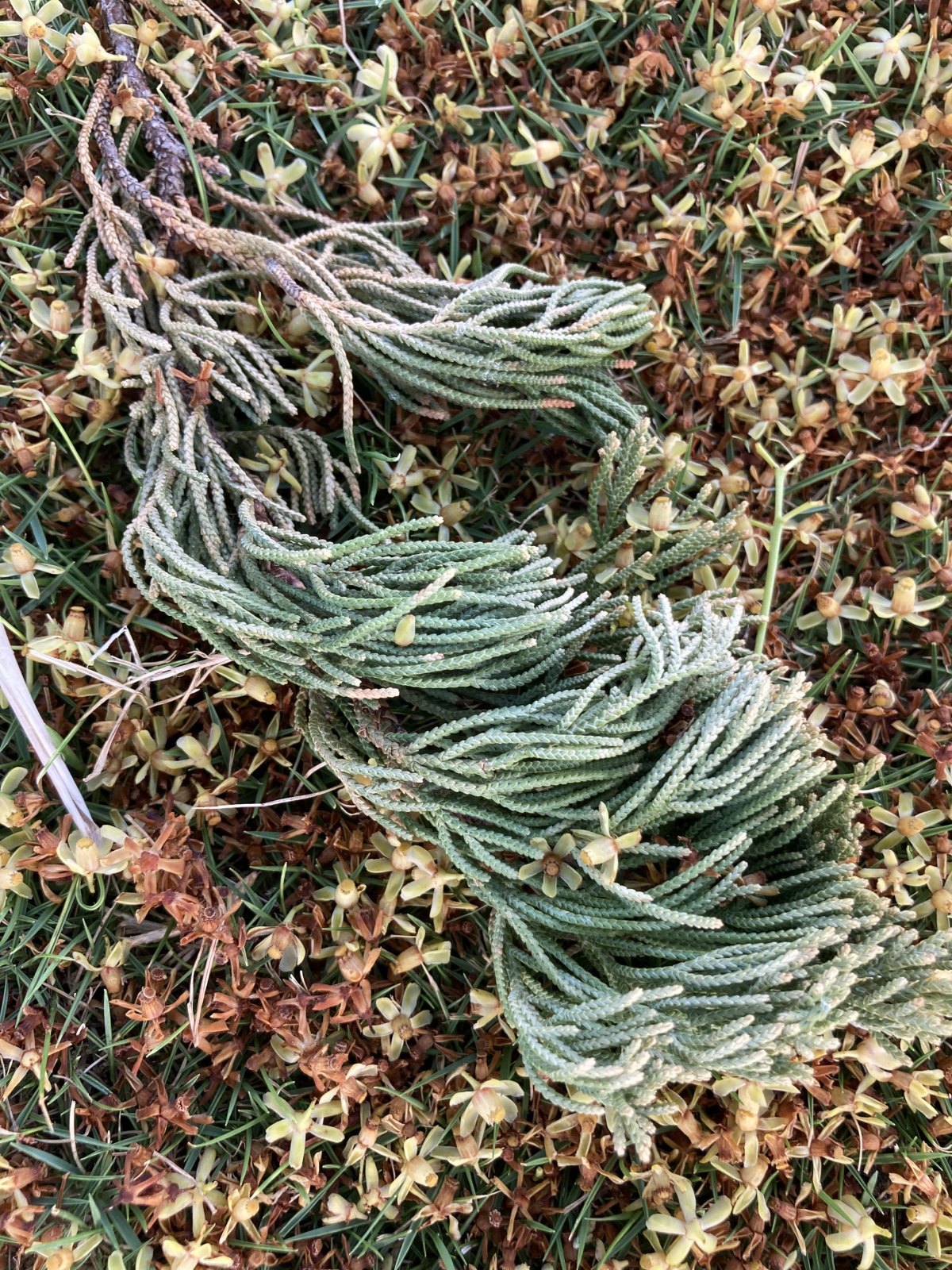
Diamond Head Cemetery. A Cook pine from New Caledonia. Yellow stars that poured from a tree? Anyone know the name? The ground as sky. The dead slumber. Decades pass. Beloved Mother. In Loving Memory. She loved the sea. Flowerless. Forgotten. This heaven was the toil of stiff hands. The invention of paradise. Lost. Airplane-filled. A single taste. A myth cascades. Rock and soil call the return to dust. Go back to where you came from.

Categories
Belief and Philosophy Divorce Health Passing in the Middle Kingdom Poetry Reading & Writing Self-help

Passing in the Middle Kingdom: Genus Mui Wo

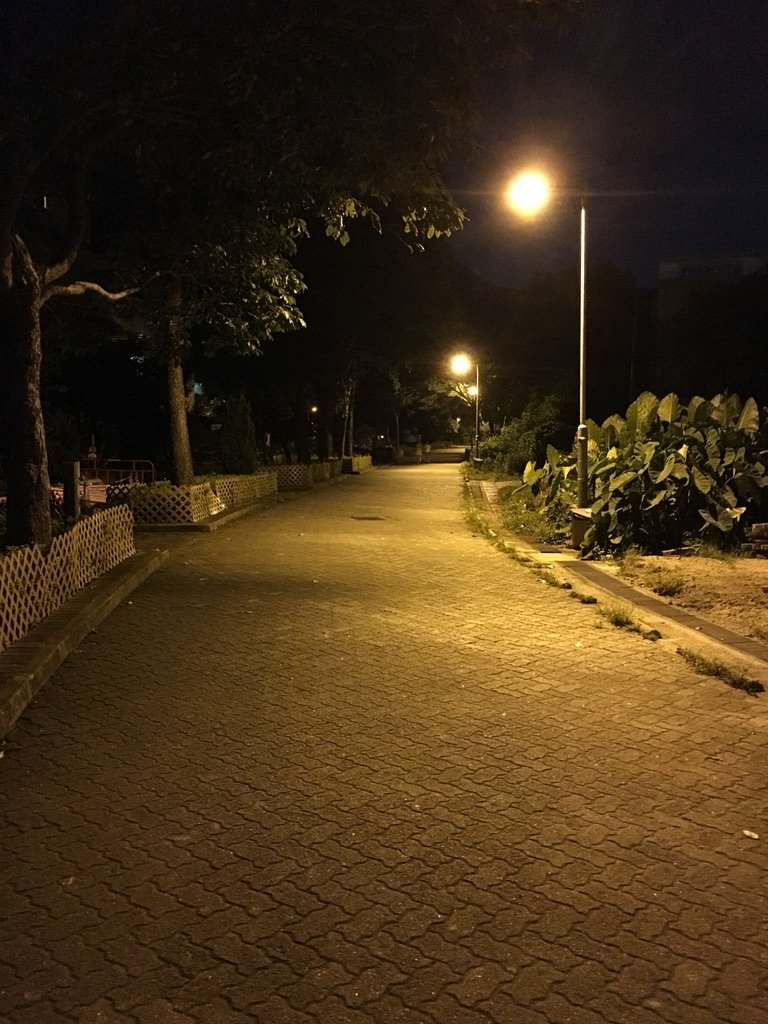
This is Mui Wo at night. The path up to my former home. It’s wonderfully quiet and there’s a calm truth to being outside with the frogs and the darkness in utter safety. Forgotten. Lost. Present.

I always felt very out of place in Hong Kong, but I have concluded that this is the nature of the city, both historically and currently, as it is a population that has been shaped by the confluence of trade, politics, and capital. It’s about movement and rather abrupt in that if you are not from the city, it’s where you come to make a deal. I always found it rather humorous that expatriates would jabber on about how HK people were unmerciful and solely concerned with finance. But uh…everyone who was there, the expatriate community–they were there to make money. Very very few expatriates are there to immerse themselves in Cantonese culture or are interested in the native population other than the ways that they provide an avenue for the accumulation of their own personal wealth or well-being. Arguably, there are many cities like this, but the racial and social hierarchies are complex in this city. Not always, but it can be very “us and them.”

There’s the indigenous population,  those that migrated from other parts of China, and those who were part and of the former British Empire–government officials, bankers, carpetbaggers, military, and explorers. Finally, there were those like me, a Korean American who ended up in Hong Kong purely by random chance, a default of a marriage to a Brit.

I was an expatriate, but not of Chinese descent, and not from the UK, nor the Commonwealth, so this made the dynamic quite different for me culturally.

A Commonwealth friend once excitedly exclaimed that there was an English speaking woman on the ferry, and in celebration of a new woman in town, there would be a get together welcoming her! There was even a gathering to greet the arrival of a Western white woman. This is when I realized the depth of the difference in the way I negotiated my existence as an expatriate of Asian descent. When you look like the majority of the population, even if you speak English, there are no Welcome Wagons for you. I thought that this must have been what life was like on the prairie in the 19th century. Like, oh the wagon is bringing out a woman from back Home etc… I know there are Korean Welcome Wagons, but personally, I have never experienced this type of thing because my identity has been so fluid. I hadn’t expected any Welcome Wagon, but I realized that life as an expatriate was different if you were not Asian and spoke English.

I remember my mom got a Welcome Wagon basket from a neighbor when we moved to Memphis. This was decades ago so my parents were integrating the white neighborhood and there was a lot of curiosity about them. I would be mortified because right when the conservative white Southern Baptist woman swung by, my mom would be there with the cleaver whacking on the cutting board with garlic rising and I could see the expression of the person’s face: “Oh my, what interesting new people…” Yes, they were different creatures in that space.

There’s a very old comedy Eddie Murphy Saturday Nite Live skit where he gets on the bus as a black/white person and the differing reactions. So often I’d hear the rantings of people’s derisive anti-Chinese comments and simply act like I didn’t understand English. I passed–hence what came to be the title of my poetry manuscript. In Asia, you have access to spaces if you are English speaking. The caste and color line become very nuanced and complicated. I had some tremendous opportunities that would not have been given to me had I been in the US. As an Asian face with lousy Asian language skills, my value was measured. If you don’t have Mandarin, given the politics of the place, it’s tough now for many, but some of the ways you move through society are personality-based.

I thought about being a different kind of species–Genus Mui Wo…I believe I was evolving into something else too, something I could not recognize. There are many ways that being out of your cultural milieu can challenge your value system, what you know about yourself, how you see the world. I was better and worse, potentially more extreme versions of who I am. This is a physical visceral sensation. My parasympathetic system was entirely out of whack. I was not feeling who I was within my former partnership, and also within my own relationship to myself. Who is the self? What is my species? How pedestrian am I? I move from being a creature of the sea to one of the sky. In a sense, this is also the story of earthly evolution. We are all from the sea and before that, the stars, and to this end we will return. Stardust.

And let’s face it, while I didn’t intend it deliberately as I wrote this piece, it touches on this idea: did you ever notice how the future is depicted in media? There are outer space creatures that have vaguely Asiatic features often featured in spandex LOL. The idea is HEY those people are MIGHTY WEIRD. Let’s uh, make them sci fi characters LOL. Because we can’t imagine them. They are perpetually Other and Foreign. As Takaki wrote, we are Strangers From a Different Shore.  I think this has long been part of my awareness of difference–being treated like a different species…so there’s that.

The reference to Korea: I almost drowned in the mountains of Korea, outside of Seoul, when I was six. We were crossing a stream, my uncle who carried me slipped. A cousin grabbed me as I went under. I pulled my uncle’s hair. It took years of swimming lessons for me to learn how to swim, although once I did, I swam quite well. After the near drowning, I would sit on the shallow end of the pool on the stairs. I hated washing my face. I terrified of the water. My mother was from Hawai’i, and while she wasn’t a particularly good swimmer, (the Mom Swim: sunglasses on, face always above water lol) I was expected to swim.

After I could finally swim, she insisted I dive. I refused. I would jump over the swimming instructor’s arm, do anything to avoid being upside down. Undaunted, my mother hired the university diving coach. He took me by my feet, hung me upside down like a fish, and said on the count of three I would be dropped in. Splash! He did this several times, and again the next day, and after that–I could dive! I was 10 or 11. Thanks, Mom! Someday I’ll write about the rip tide which still leaves me with some anxiety, but that’s for later…

Reading this poem again, I recognize that I was fatigued, bored, frustrated, and exhausted by the marriage, but yes, I had the minnow, my small child, and so I stayed, as many do. I felt more dead than alive, but my child kept me going. I poured everything onto the page as there was nowhere else to leave it. You start to collapse into yourself. As a child I escaped by reading and writing. During the course of my marriage I read and write to escape amassing pages and degrees and doing whatever I could to avoid my physical reality.

All the while in Hong Kong, I could easily deconstruct how race and nation played out, but patriarchy was more difficult. I should say this was in specific to my own situation. When you are isolated emotionally you become inured to carelessness and cruelty and in the end, this is how and why you can become subject and vulnerable to abuse. In another cultural context too, one can become uncertain of the parameters and structures. Is this the story I know? Is this story playing out because I am in a different space? Where is the beginning and where is the ending? Existentialist type of questions.

I have a different kind of empathy now watching mothers with their small children if they are raising their children outside of their home culture. I can see all the anxiety, the concerns about doing what people are saying is best, but what, within your own culture doesn’t make sense.When you are not in your own milieu, your cultural values become uncertain and questioned. You must adapt–the question becomes what do you change, shift, and why?

I rewrote the ending of this piece many many times. But yes, I did grab that small hand and we ended up in Hawai’i–the ancestral home. Me and The Kid. Right across the street from where my family is buried.


Genus Mui Wo


Kick. Glide. An ageless alien floats.

Close eyes. Close eyes.

No tentacles, only gills, tales of tails.

To elude conscription

I snap skin from honey to olive,

declare citizenship,

nurse milk from stone,

scuttle over shallow water,

dodge mops. Hide. Seek.

Miscalculations of the moon stranded me.

Risks are for the hunt.

On and off the endangered species list,

experts argue: A bony beak.

Jelly lips. Feet trained to point.

I’m pedestrian,

a nylon-clad refugee,

swimming lap after lap.

Please, do not filet.

A diligent learner, I open jars, play puzzles.

Hostile conditions rendered me mute.

Survival, a testament to tenacity,

obedience, fear.

Plastic goggles squeeze eye sockets,

reveal loops ad infinitum.

***

I Almost Drown

DAY— KOREA — A MOUNTAIN CREEK.

We drive from the City. Two urban pale uncles hoist children on their shoulders, water skims chins. The sun flicks its light. Footholds missed! Kicks. Sputter. A strong arm. Saved by Cousin Ki-dong op-ah’s red and white inner tube. I am six. Shattered on the sandy river bank, twisted in bladderwrack, fish cheeks like pebbles, glassy eyes rimmed pink.

Years of failure, but Mother persists. This is not tennis! I butterfly, backstroke, breaststroke, freestyle, dive, hobble ashore with webbed feet. Beached, I weep for the sea.

fin

 FADE TO BLACK

***

My nocturnal mate provides shelter,

hunts with a weapon to his ear.

A stomach x-ray reveals a corroded past.

A beast-baring teeth, he attacks seaweed strands,

black painted lines.

I watch the show in silence.

Dolphin hooped: I applaud on demand.

I long to disappear,

but a tiny one swims by my side.

I stay.

Open a book. Tumble into words.

When the minnow pedals the prehistoric cycle,

I’ll shrink to a cloud bite in the blackest tea.

Before my organs drown and stop,

I dream the sea parts my heart,

walk the collapse of blueberry night,

and lick death’s sweet.

I note my eye’s lemon light,

marvel at my downy skin,

flex my talons.

Ready for flight!

I leap to private myths—

cloud wrap a phoenix belief

from shredded wings,

grab a small hand,

clutch my heart,

instinct pressing me home.
Categories
Belief and Philosophy Divorce Hawai'i Health Passing in the Middle Kingdom Poetry Self-help Woman. Warrior. Writer.

Passing in the Middle Kingdom: I Never Liked Redheads

This poem appeared in the hard copy journal Voice and Verse Poetry Magazine Intercourse and Intertextuality (2019).

Myself, ex, and child were in London. We stayed in Canary Wharf. Shout out to Mark Higham @theartshop360 for the image. I sat in the bathtub writing. Yes, at 3AM. I had spent the day alone pushing my child along in a stroller and went to the Tate. I can’t remember the exhibit. I remember wheeling the push chair as they say in UK English, or stroller as they say in American English, over concrete.

Lots of concrete. Are people still pouring concrete everywhere in an attempt to make floor fashionable? After living in a place where concrete dust was always flying due to buildings going up, I really loathe concrete. It’s a necessity, but why get worked up about it aesthetically?

By now, life was full-swing dysfunctional–although in retrospect, it was never functional and full of anxiety and abuse. There were only a few brief windows over the course of many years when there was any calm to the relationship. It was either volatility or boredom.

I see now from a distance that even in the early days (the reference below to steamy night was the night of Handover and meeting up in a bar in Lan Kwai Fong) there was an unease that later became a resignation. There was the stress of money, addiction, depression, passports, and whatever headaches that modern expatriate multi-national relationships potentially have. The difference at this point, which I clearly sensed, was infidelity, though I am now aware that lying is not something someone suddenly does. People lie. Or they don’t. Some lie more than others. At the root of lying is the fear of authenticity. My former mother-in-law was a redhead, which gives everything an Oedipal spin.

I wanted to create a poem that was very short and ambiguous, but not. There are always games of evasion and language. I like the poem now. Moreover, I inhabit such a different emotional space.

I. Am. Free.

I think that might be a new three-word poem. I think that’s about all I need to ever write. Because maybe, that’s all there really is. Once you start moving differently in your truth there is nothing more. This includes fear of Death. I may have some fear of certain physical gestures or movements (i.e. I don’t wear a hat anymore surfing because I tried to come up for air and the hat was in front of my face and I couldn’t get it off and it freaked me out), but fear of Death, no. I am truly not anxious…because yes, this is what it means to live in your own personal truth. You hit the end, and you’re okay with it.


I Never Liked Redheads


I see—

red hair and pale flesh straddling you.

I awaken,

sweat, kick in the dark.


I remember:

a silk dress damp against my skin

the steam of Hong Kong’s night

when you walked

in from the rain.


Desert sun on my back,

light spilled on your shoulders.

A soothing whisper, a baby born.

The wounds and crush.


Dream:

a journey down a silken road tropic solitude

walks in cold forests

slow, slow.

Poetry.


Truth:

long commutes, silent returns

a chase that devours.

Back to back

fast, fast.

Money.


I pen this in a hotel bathtub at 3AM,

rest on a brown cushion on cool porcelain.

You come in to pee.

I tell you the dream, you say,

I never liked redheads,

and return to sleep.