Categories
Belief and Philosophy Break Divorce Reading & Writing Self-help Woman. Warrior. Writer.

BREAK: Divorce and Voice

When writers, readers, and critics speak of a writer’s voice they are referencing the writer’s chosen words that reveal the writer’s self, how she perceives and moves in the world. Voice is the writer’s soul and spirit, and how the writer brings this to the page is the writer’s voice. Being honest to our voice, to who we are, is the key task in the writing of a story, and our life’s most significant mission. If we cannot be who we are, then who shall we be?

When we refer to a writer’s voice, most telling and daunting is that there exists a distinctly proscribed way of conveying written text codified by primarily male writers. It has been this way for centuries. It will continue to be this way. In the process of trying to convey our story, we quiet or even lose our voice because we are fearful. We strive to appease or appeal to people who judge us according to an unknown or mysterious standard that often, we can never achieve as it is rather subjective. And yet, it is imperative that we persevere and risk writing who we are as otherwise, our voice is silent, and if ours, then many other women who are out there too. When we are courageous about our voice, we pave the way for dozens of others to follow suit.

We must have faith in the story. Believe in our right to write. While writing is a learned skill, the ability to reveal who we are is directly correlated to our willingness to be vulnerable on the page. Our words are meaningful because our story matters. The voice that we summon is one that acknowledges our full self. This voice is the beautiful, courageous, resilient, complete self who has declared her right to live as a one who wants to set the terms of her own life.

Whoever controls the text controls the story. A delivery through the medium of writing often prompts a different reaction because texts impart a permanence. Words on a page compel an undeniable respect. Every major cultural, religious, legal, and creative institution’s laws and customs are upheld, reinforced, and codified by text. Someone writes the text; another person interprets this text; yet another person writes a story based on this interpretation. We are readers of a story several layers away from the primary text. Imagine what remains and what changes. Given this truth, it’s important to throw your own voice into this layered chorus and write with everything you are. You are your voice. Write your truth to power.

 We may feel inhibited about the physical act of putting words down on a page. An easy solution is to simply pretend that we are speaking to someone: talk to the page! For accuracy, we record our voice with a phone or device, and transcribe the spoken words. Edit for clarity. Speaking and writing use different parts of our brain, but know that communication is linked, writing inhibition is real, and however we get our words onto the page will be fine. The vast majority of the globe’s illiterate are women, but our wisdom transcends what is written; this is how we have survived through the millennia. Know that through the power of our oral storytelling we write a story on the page—for those of us who cannot write we put our words down on paper. We do this by recording our story.

A woman’s voice is often considered dangerous. How often are women accused of being shrill? The numerous complaints about a woman’s voice—her accent, her tone, her articulation are familiar to anyone follows the commentary about women in the public spotlight. There are no end of complaints about the actual pitch of a woman’s voice, but what most dig at is a particular woman’s willingness to use her voice in an arena that women rarely participate in.

Breaking silence is looked upon as disruptive and to break the silence about our marriage, enshrined across the globe as an institution to maintain stability within a system of patriarchy, is considered at best poor taste, and at worst, a display worthy of public condemnation. Marriage is considered private. Personal. And it is. But to dismantle a marriage through divorce requires outside documentation (just as marriage did), and to write the details of this break-up potentially place women in the position of being seen as dangerous. We may or may not be the very first woman in our family to divorce, but it is highly likely that we are the first woman who records the reasons for the divorce. It is inconvenient, if not unpleasant for most people to be presented with anything that disrupts the norm. The truth is the details that prompted your divorce are unimportant to most, but they are important to you, and therefore worth writing.

You may be quiet, someone who is reluctant to expose your private happenings to anyone, but you have a right to exercise the use of your voice. There is no reason for your silence.

Write your divorce story. Discuss the inclusion of your divorce story in your legal file.

Write your story. Change your mind. Author your life.



Categories
Belief and Philosophy Blog Break Divorce Reading & Writing Self-help Woman. Warrior. Writer.

BREAK: Don’t Hold Your Breath

When you are divorcing you are scrambling to check off everything you need to do to get to the next step. You understand there’s a safe harbor out there beyond the horizon, but it’s as if you are setting off to sea with no clear map, only an idea of the destination. There are also rumors milling about that the globe is flat and you have been warned you could fall off at any time.

You don’t know how you do it, but you manage to move forward. You ask people for help. You figure out the steps. You are moving to a resolution and you are aware that you have to get to the end. You would like to sprint, but are starting to feel it’s a marathon ahead.

Remember that as this process is unfolding you have to take time out to simply breathe.

I’ve taken different kinds of physical exercise classes in my lifetime, from dance to martial arts to yoga to weightlifting. At one point or another, they all address the idea of breathing properly.

I’ve been told to breath in with my nose, out through my mouth

Count my breaths.

Touch my tongue to the roof of my mouth on the exhale.

Quickly exhale from my lower belly.

Slowly exhale from my lower belly.

Breathe in and out through my nose.

Breathe in my breath and focus on sending to other parts of my body.

Close my eyes and breathe in.

Open my eyes after I breathe out.

Breathe fast.

Breathe slow.

Breathe in the dark.

Breathe and imagine my third eye.

Relax my shoulders and breathe.

Take big breaths.

Avoid breathing in and out through my mouth.

Make a sound while breathing out.

They are all correct. About a month ago I realized that after I popped up on the surfboard I was holding my breath.

I have since corrected that, but I sometimes remind myself to breathe by using an exhale sound a Tang Soo Do instructor Master Jang once taught me, it’s a bit like this on the exhale: SHHOOOOOPPP.

I was fascinated to discover that for months I had been popping up on my surfboard and frequently not breathing. It explained a lot. It also made me think about why I would do this.

The truth is we hold our breath when it feels unsafe to breathe and we know we will be able to hit the surface and find space to relax. Holding our breath is never meant to be permanent. It’s a momentary action, an anticipation of eventual release.

Existing in terrible marriage before divorce was like holding my breath. I was drowning, but refused to surface. If you have been used to holding your breath you often don’t believe that the air is available.

For me, to divorce was to breathe.

When we begin our divorce we can finally exhale—we are free of the indecision surrounding whether or not to divorce! Then comes the second breath. We may have to think about our second breath. And third.

Eventually, normal breathing returns. But there are places and moments where we still hold our breath.  Because this is body memory at work. For me, there was no history of surfing while married. But I realized that I was holding my breath surfing because once more, I was in a situation that I felt I could not control. Holding my breath stiffened my body. It limits fluidity and agility. Indeed when the air and water that exists within you becomes porous with the exterior world and achieves an equilibrium wherein you become inseparable from the very moment and state you are in, this is the ideal state. Holding my breath created a protective wall between my interior and exterior world, but it did not allow me to relax.

Take some time during the divorce process to think about your breathing. See how a minute of being conscious of your breathing feels. You will do all that you need to do and holding your breath will not keep you safer. It will not make the divorce go more smoothly. Holding your breath will only make it more difficult for you to feel in control—your body stiffens.

Breathe in. Breathe out. Everything Will Be Fine.


Categories
Break Divorce Health Self-help

BREAK: Choosing a Therapist

A therapist can be an important person in your life during divorce. I’m not going to discuss why one refuses therapy. Frankly, I can’t get into that. You have to do what works for you. Therapy helped me through divorce.

While I started therapy with one person at the beginning of my divorce after 1-2 meetings, I felt a little uncomfortable, plus I was moving. I decided to search around for a new one.

I had a solid therapist who really helped me transition through divorce. Here are my suggestions and ideas:

  1. Google and do some research about the practitioners in your area. Ask for recommendations from friends.
  2. Note that psychiatrists can prescribe meds, but psychologists and counselors do not.
  3. Do you think that this person can help you as you are moving through your divorce? Remember that there are different steps. A person who is there smack in the middle of your crisis can be great for that time period, and may not work post-divorce. We turn to different people at different points. Understand and think about what you need.
  4. What is the background of the therapist—area of expertise? Perhaps the therapist is an expert in adolescent behavior or addiction, couples therapy? You have to get a handle on this.
  5. Area of knowledge/framework: Personally, I avoid Freudians. Freud was an interesting philosopher and a cocaine addict with dubious ideas about women. If you say you are a Freudian practitioner, I am going to run the hell away. Call me a downer, but yeah, my feeling is that Freud probably made a helluva lot of women feel bad about themselves. I vote for Gestalt or Cognitive Behavioral Therapy (CBT) — the latter, in particular, deals in the here and now. But most practitioners do know and understand different modalities. For me, I wanted to just get through the divorce. Yes, I delved into early childhood, but in the trenches of divorce I had no bandwidth to rewind as the divorce itself was grueling week after week. I didn’t get into a huge amount of my past until later. Now, I’m ready to work with a different sort of therapist. So again, you have to figure out what you need.
  6. Do you feel comfortable talking to this person? Age, background, gender, ethnicity, political leanings? You will be meeting this person at least once a week or so, how do you feel about this person?
  7. Therapy is about emotional work and understanding people’s position in society and within the context of a certain type of patriarchal culture. I have personally never worked with a male therapist, but then again, I have seen a male gynecologist exactly once. In the past, I have also prioritized therapists who understand my position as a woman of color. I’ve had black, Asian-Chinese and Korean descent, and white women therapists. Before you run to a therapist, do some reflection about what you think you will need during this time period of the divorce process. Some people feel more comfortable working with people who are completely unlike who they are. Others not. It all is down to knowing who you need to be on your team. A therapist is on your team.
  8. If you don’t want to see a therapist or are unable to do so, make sure you can count on friends or family as you transition. Divorce is hard. We all need support!
Categories
Belief and Philosophy Blog Break Divorce Health Self-help Woman. Warrior. Writer.

BREAK: Choosing Your Divorce Lawyer

A word to those embarking on their divorce journey: a key player on your divorce team is your lawyer. Divorce is the disruption of a business agreement. A break. It is not a time to say “Oh, I don’t really care. I feel too tired to make any decisions.” Think about it: No matter how tired you got of organizing your wedding, you were able to find the energy to figure out the logistics or style of your cake or dress. Muster the energy to get legal support. The only divorce that goes away is the completed one.

Get referrals to lawyers from friends. I interviewed a dozen lawyers both overseas and in the US. You need to be willing to give the facts. Be prepared to discuss the details and personal information. Divorce varies from state to state, nation to nation. Know some basics—google.

Your lawyer must be on your team. This is more important than any other quality or characteristic. Will the lawyer understand you more due to your gender? Ethnicity? Background? Frankly, that’s hard to say. The lawyer must understand your perspective. I had one lawyer (woman) tell me she didn’t like representing women as they were “too emotional”.

I didn’t hire her—and I would go so far as any woman would be absolutely bonkers to hire someone who is uttering such sexist statements. This woman is rooting for the patriarchy. I will bluntly state something here. You may be too (with or without knowing it), but get this women, if someone is rooting for the patriarchy, where does that leave you? In. The. Dust. Or if you prefer a metaphor from this image: smashing your head on a coral reef.

If you are in a precarious psychological state or are not versed in the financial or business implications of your split, you need to know your lawyer will look out for you. You must be able to speak truthfully to this person. If you get a bad vibe, if you can’t trust this person, do not ignore your instincts—find someone else.

One of the best pieces of advice I got from a friend was this: “Do not use your lawyer as a therapist.” Lawyers figure out your legal and financial interests. Therapists fix your emotional issues. Using your lawyer as a therapist is very costly.

Ask the following:

  • Experience with your type of case (be prepared to state in a few sentences what you have going on—kids, money, property etc…).
  • Retainer and hourly rates/estimate
  • Advice about mediation, collaborative, or standard divorce
  • Time framework and availability

Start writing your divorce story. How do you do this? You have to start changing your mind about who you are and who you were. Examine the Master Narratives that governed your life. Look at yourself with new eyes. Writing your story and sharing it with your lawyer will help move you forward, as well as center your thoughts and ideas as you head into the next chapter of your brave and beautiful life.


Categories
Reading & Writing

The Feeling of Han Exhibit Opens September 16, 2021

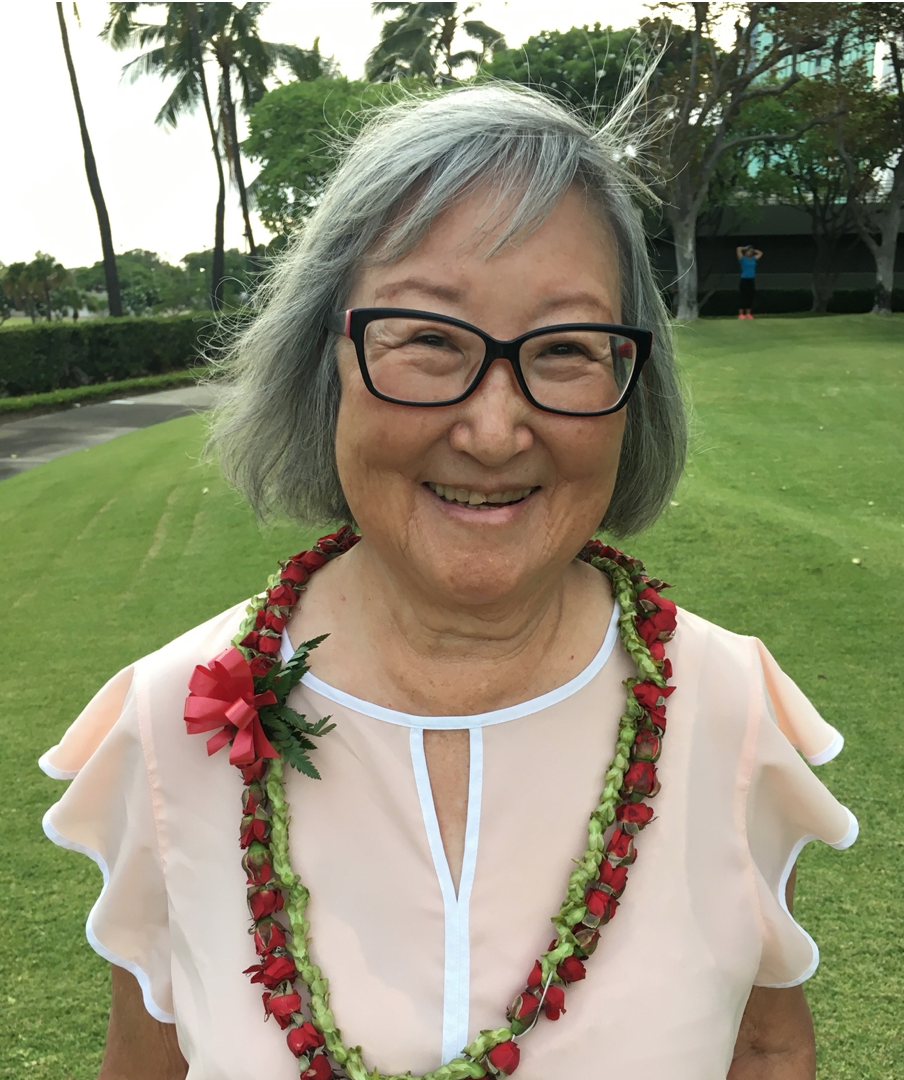
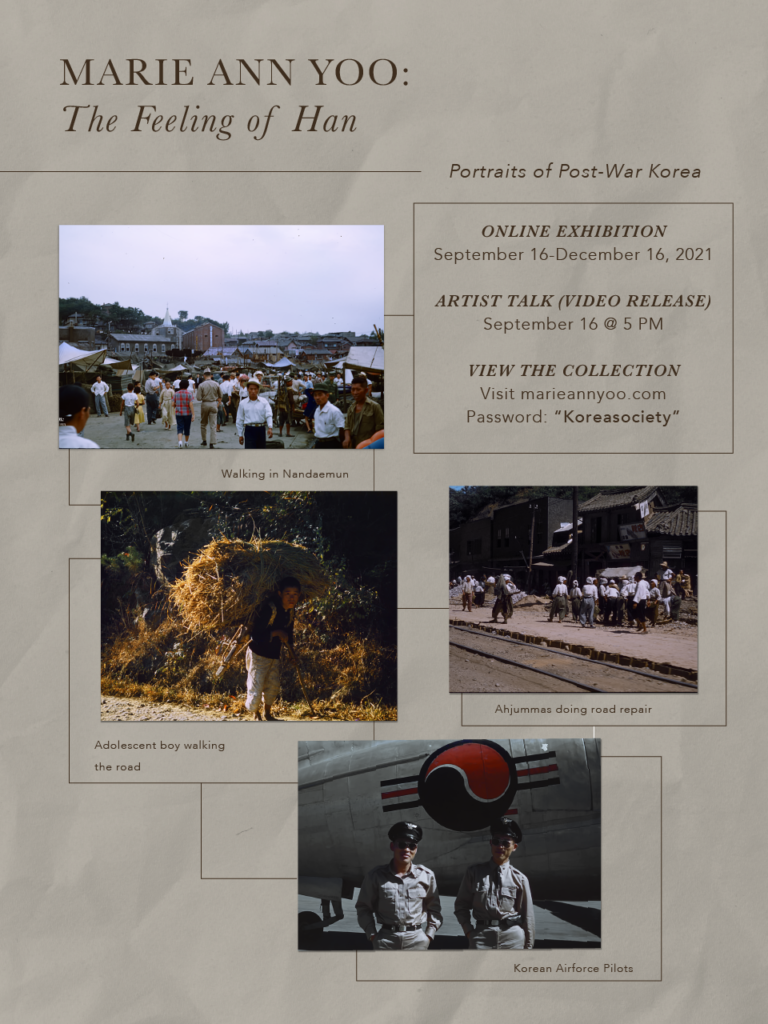
I am very pleased to announce that September’s Woman Warrior is my mother Marie Ann Yoo! Her photography online exhibition The Feeling of Han: Portraits of Post- War Korea (1956-1957) opens at the Korea Society and runs from Thursday, September 16-December 16. Her artist talk video release is September 16 @11AM (HST) and will be available on the Korea society Youtube channel after that date.

Click here to directly visit the online exhibition.

To view the collection, use the password: Koreasociety

Marie Ann Kauang-Hee Yoo was born in 1936 in Honolulu, Hawaiʻi and raised on the Kunia Camp plantation. A descendant of the first wave of Korean immigrants to the US (1903-1905), her family’s reasons for immigration to the territory of Hawaiʻi were like other Koreans: to practice Christianity, escape Japan’s colonial rule, and ensure their children’s education.


In 1955 Syngman Rhee, a family friend and the first president of South Korea, offered Yoo‘s mother, Salome Han, the opportunity to be the Public Relations Director of Bando Hotel, which was located in what is now the site of the Lotte Hotel in Myeongdong near City Hall in Seoul. Marie Ann, then a student at the University of Hawaiʻi, and her sister Elizabeth, who had just graduated from high school, joined their mother and moved to Seoul for one year.

After her sojourn to Korea, Marie Ann transferred to the University of Oregon where she majored in East Asian Studies and political science. After relocating to the Bay Area, she married Dr. Tai-June Yoo and raised three daughters, Stephanie, Christine, and Katherine. She traveled the world and lived across the continental United States, returning many times to visit Korea and lived there again, briefly from 1969-70. After decades away from the Islands, she has returned home to retire in Hawaiʻi.

* *

My mother gave me the gift of reading and in this way, she is responsible for initiating my journey into the world of reading and writing. By the time I was 8, I had moved every year. Making friends was a challenge for me. I was often the only Asian child in my class or neighborhood, and this led to feelings of isolation and self-consciousness. I keenly felt my difference. When I told my mother I had no friends, she told me to read a book, because if I do this, I would always have friends. (For those teachers reading this who are horrified, there wasn’t much of a social emotional learning emphasis in those days…) Mom was right. In stories I entered a dream and found freedom. My mother encouraged my intellectual and creative interests, and it was her appreciation of art, music, food, flowers, and all of the cultural and aesthetic aspects of life that shaped my perceptions of the world. Through her I came to see how beauty shapes the truths and possibilities of what we can imagine. My mother taught me how to dream.

She debuts as a photographer at the age of 86.

Congratulations to Marie Ann Yoo!

I hope this inspires some of you: everyone’s journey is different. Time is elastic. Art matters because you do. Women move through society juggling a multitude of roles and identities. Hold fast to your dreams and know that your stories, in whatever form they take, will find their way into the world and are always relevant.

Categories
Belief and Philosophy Blog Hawai'i Health Self-help

Hawai’i: Friendship

I spent the ages of 13-17 in boarding school at Phillips Academy Andover. I say now that the only time I wasn’t competing was when I was sleeping. Andover was about performance, excellence, and achievement within the very specific parameters of the East Coast establishment.

In retrospect my journey in life has been highly influenced by the relatively short amount of time I attended that school. I lost touch with almost everyone I knew from that time, and as the years passed came to wonder if I had imagined the friendships I had cultivated there.

In the end, I concluded that the majority of the ways that we were taught to behave were in fact oppositional to how one cultivates friendship and compassion, and the relationships were primarily utilitarian. Adolescence is a difficult time, never mind if you are thrown into an environment that focuses on your believed potential. I deeply appreciated learning the profound lessons of literary analysis, and yes, the testing of one’s abilities is part of growing up.

But true friendship is rarely made of this stuff. It’s about kindness, support, and tolerance. It’s about the joys and foibles of a human relationship. Compassion. Foibles. Joys. Forgiveness. Connection of the spirit and heart. I would like to say that I developed a host of friendships from Andover, but truly, I did not. I’d say I had hundreds of acquaintances, some very close, but could rarely be myself, although what teen is herself? That’s the nature of being a teen! Figuring it out! I will say that if a true friendship was developed and survived from that time, it is likely to be real. Like many private institutions for the elite, it functioned as a place of networking.

For years in my adult life I avoided anyone having to do with the school. I questioned if I had anything in common with them, politically, emotionally, or socially. It was designed to be an environment of handpicked children who were anointed by the Admissions Office Gods as young leaders in the making. After I left, I didn’t feel I was leading in anything. Where was I supposed to lead someone? Why me? Who is leading? Can’t I follow? I’m tired! Where are we heading? This leading stuff is very not mellow! she said…in cowardice? With anxiety? When I did bother to check in on what was going on with most of the people, I noted how many of them continued to compete, and behave in a manner I deeply questioned for reasons of ethics and kindness.


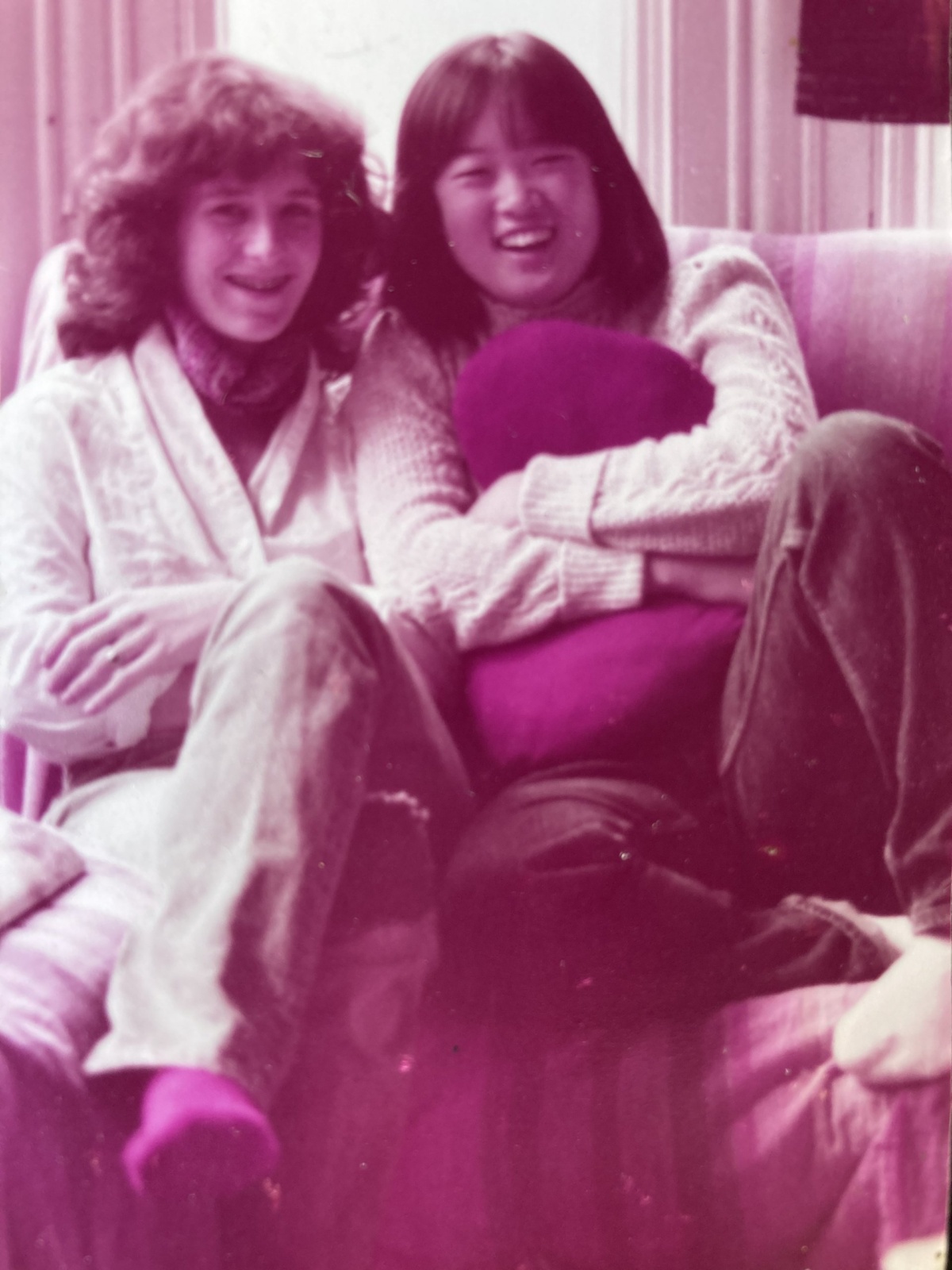
During COVID I reconnected with my old dormmate and friend Catherine Cotins. We had seen each other once over a decade ago when I was in Boston for a conference, having found each other again on social media. We had lost touch since high school graduation and had gone on our separate paths, navigating our way through school, children, illness, deaths, work, marriage, divorce, and the long river of life with everything that it throws your way.

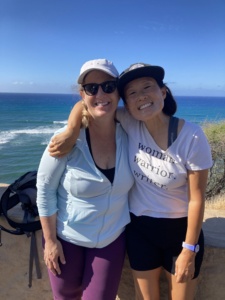
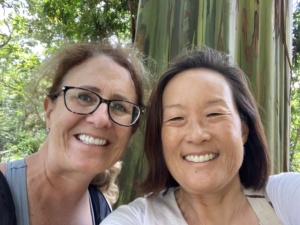
A few months ago Cathy Cotins came to Hawai’i. We talked, hiked, laughed, and went out stand-up paddleboarding and got tired shoulders. I met her son and she met mine. She went to dinner with mom and dad after all that time. Her son was older than she was when she had last seen my parents. She had spent the summer after senior year with my family while we toiled in my dad’s lab injecting rats with diseases (more on that later…I know how to swiftly break a rat’s neck, but uh, haven’t used that dubious skill ever since. Any science interest either one of us remotely had was dead by the end of that summer!). We couldn’t stop talking and sharing. What was both meaningful, reassuring, and exciting about meeting up with each other was knowing that I did have a true friend who knew who I was so long ago, and here we are, decades later, and we still have this connection.


She gave me this little book I Like You by Sandol Stoddard Warburg, illustrated by Jacqueline Chwast about friendship and inscribed these words: “…I hope we can always stay friends. We’re so different so much the same, and good compliments to each other all at the same time. We may not do that much together, but when we do something, it’s always so much fun no matter how small…The world isn’t such a bad place with friends like you in it.”

Andover was hard on both of us, an experience we wanted to forget for our own individual reasons. I’m so glad we are friends again and know I will know her the rest of my life. This is a fantastic feeling.

Cathy texted me after she returned, both of us so happy to have reconnected and said this about seeing each other, especially in the context of that hard time during school and what it did: I feel less broken.

That’s what a good friendship does—it heals and opens you through connection. It changes the future and present as it changes the memories of a place and time. By reconnecting again, the ending changed, and in this way, everything else ripples back and forth and flows with a different sense of meaning. We get better through knowing and sharing with other people. We need people to cheer us on in life, to empathize and to be compassionate with us. This friendship makes me so very happy. She’s thousands of miles away, but there are few people in life who get who you are and to know someone does! What a great feeling! I feel honored to call Cathy my friend!

This is all to say that yes, get in touch with that person you once knew, because there is a good chance that what you will find out is that you did know each other, you were friends, and that can make all the difference as you journey on discovering who you are. Because the way that someone knows you, if the person really knows you, is probably important and a reminder of possibility and dreams. You are there for each other. Connect. Reconnect. Friendship.