Categories
Educators Reading & Writing Teachers

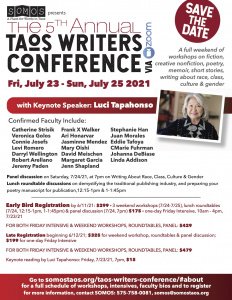
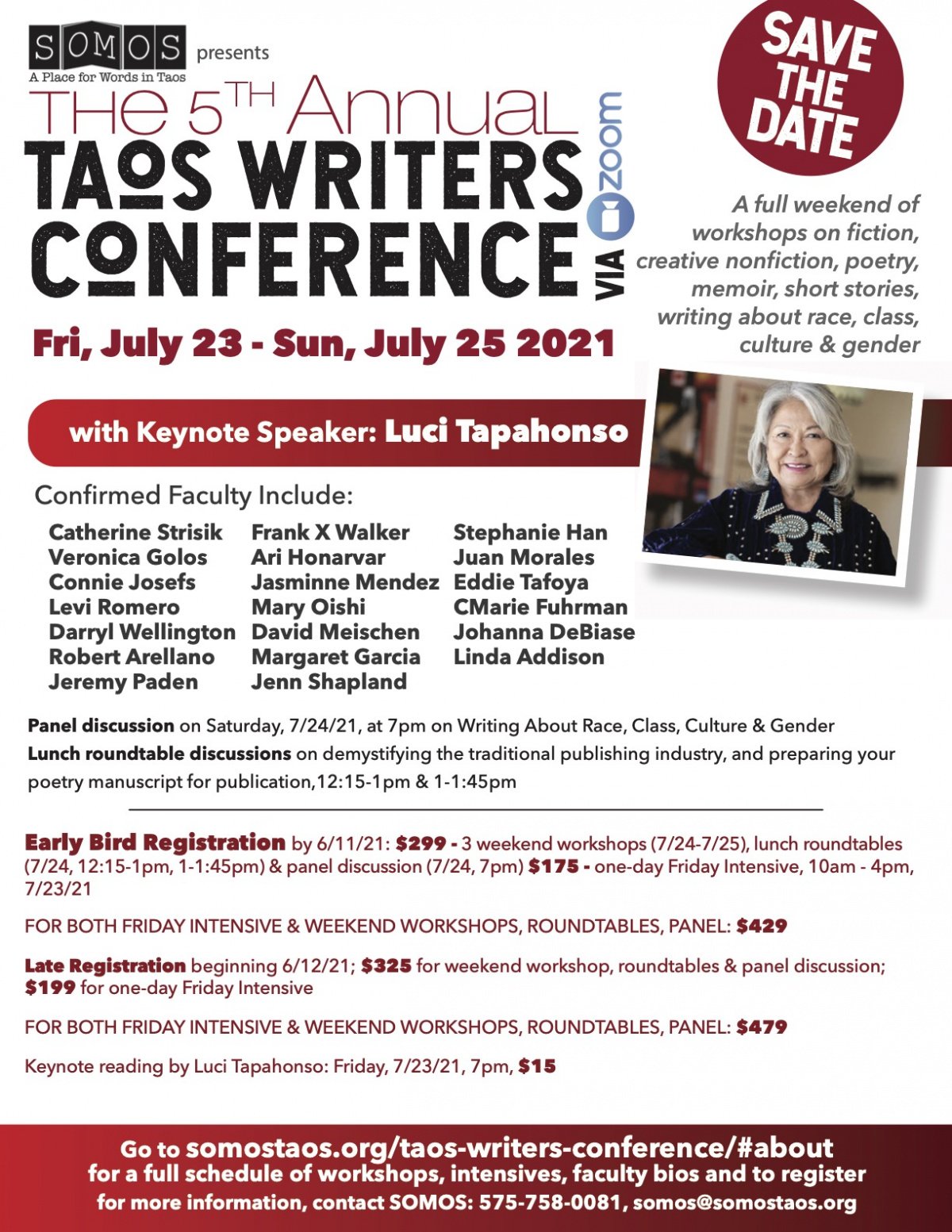
Taos Writers Conference sponsored by SOMOS July 25

I’ll be teaching at the Taos Writers’ Conference a workshop on Identity and Voice: The Narrative of Group and Self on July 25, 2021.

This workshop will cover both the process and craft of writing fiction. How does an individual’s voice determine how stories are shaped, which stories are told. How do we write ourselves into being? What are the limits and possibilities of the stories of the group and the stories of the individual—how do fiction writers wrestle with the paradox of belonging and emotional truth telling? Why does authorship of life affect story?
This workshop stresses voice and participants will be asked to both write and share as we engage with approaches to solving issues that arise when writing fictional narratives. Exploration about how voice shapes story will enable students to approach their work with a new lens and confidently author the stories that only they can write. Writers will leave with a different idea about their writing process as they engage with the craft of fiction.

Register now! I look forward to seeing you in class!

Categories
Blog Reading & Writing

1982. Phillips Academy Andover. Barnard College. Vincent Chin. Asian America.

Aloha…Ye Olde Blog will begin again…

When I saw this #stopasianhate video I am reminded of where we are now, socially and politically as a society, but also, who I was at the time when I first became aware of how racism is systemic (Vincent Chin lived in the auto making industry area, people were anti-Asian and mired in Yellow Peril ideology about the auto industry, and so they killed him for being Japanese—he was Chinese).

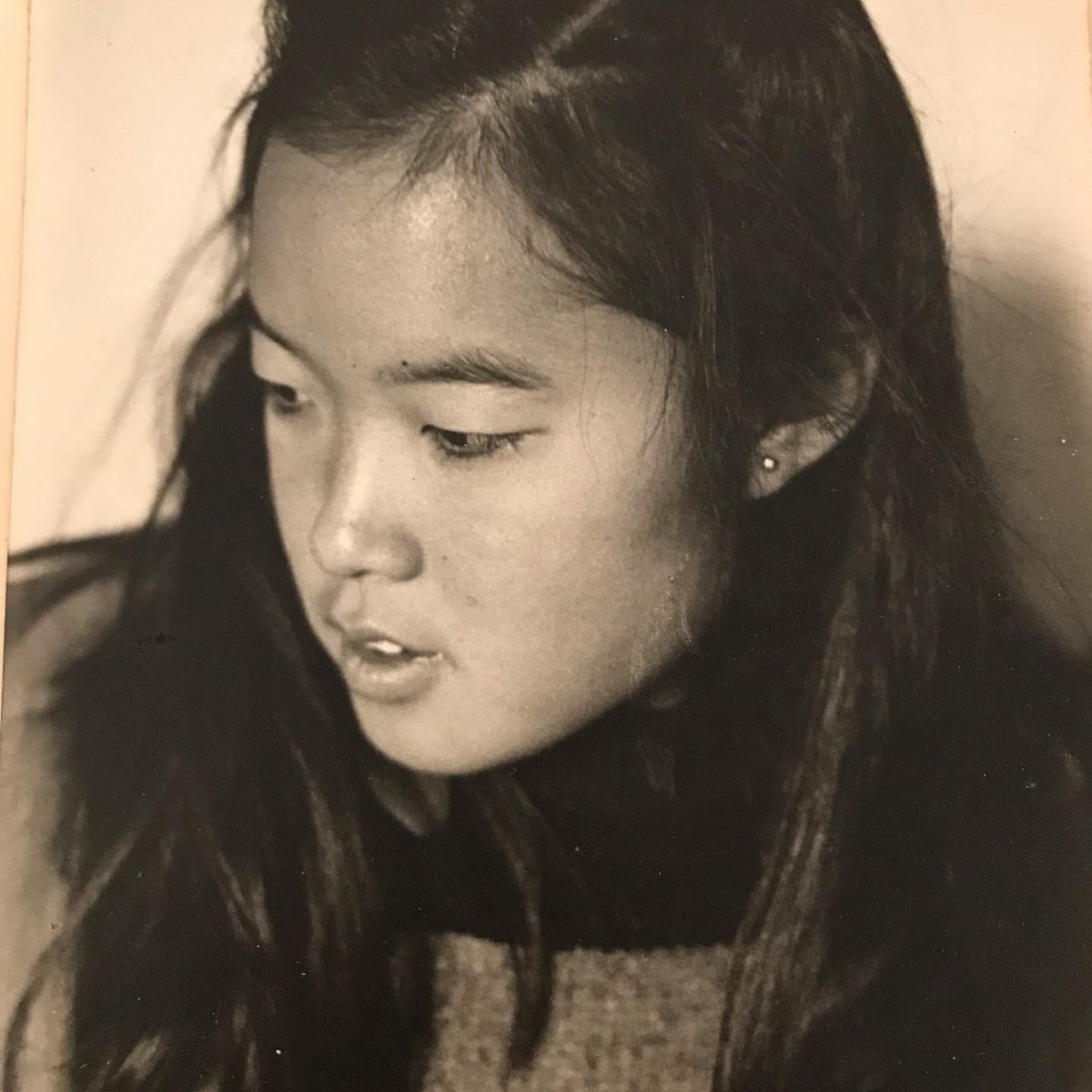
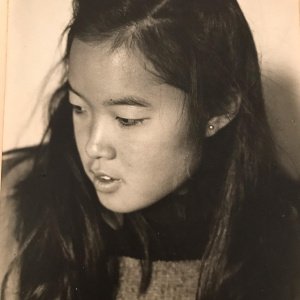
1982 was the year I graduated from PA and headed to Barnard College was the year that Vincent Chin was killed. I took a semester off from Barnard and was interning at the Asian arts and lit magazine BRIDGE. It was in some ways, the beginning of an awareness of an AA identity, but it would take many years of struggle to understand the concept and what it meant.

As a cross between a 1st and 4th generation AA my narrative was never a neat one.

Most AA at college then, the two schools were both separate (Columbia/Barnard) back then, were 1st and 2nd generation. The vibe is very different generationally. I was introduced to AA as “this person who does not speak Korean” and was given circus freak show status. I half expected people to yell at me for betraying my ancestors. My mother, however, doesn’t speak, and what most young people then did not understand is the complexities of immigration patterns.

In retrospect, I should have gone West to university (where I ended up living) where there were entire Asian American Studies programs. But Andover was and probably still is East Coast centric and the idea of being in a student body of Asian Americans didn’t occur to college counseling. Even now, the first thing I tell most Asian Americans when I meet them who feel at a loss and are mired in private institution blues is this: go West. Numbers matter. If you’re in an environment where the Asian community has been entrenched for awhile, at the very rock bottom least, you are not a complete freak show. (Obviously, I was really scarred by it. I haven’t been in a non Asian majority environment in 15 years… I lived in HK and now in Hawai’i–hard choices for some, but for me it was a good decision).

Years later, I would meet up with a PA friend in HK, Chinese descent, who was naming all the racist girls in her dorm–as I recall the most popular and elite white pedigreed girls of our class, and I realized she had deep trauma from that time period she had carried with her. She unloaded. While we are not in touch too much, I realized that it was this weird time and space moment… she needed to tell someone. We compared notes and concluded the college counselor we both had was racist. She was a racist for sure! We both could see this as adults! It felt weird to hear that after decades and confirm my teenage self wasn’t wrong to feel so at odds and discouraged by this authority figure.

As I prepare a history lesson for the Council of Korean Americans, I am reminded how the collective idea of Asian America is what makes me who I am. It is the global as manifested within an American identity. And what is it that we share, truly across these groups? Not language, not food, not religion, not history.

What we share as Koreans, Vietnamese, Filipinos, Hmong, Chinese, Pakistanis, Indians, Japanese – people who are American but who can claim ancestry from Asia, is an awareness and experience of racism, discrimination, the yearning for a dream of self and the cruel understanding of Empire, Nation and Myth.
That’s what makes us, that common thread, in the end…Asian American.
Categories
Blog Listen and Watch Video

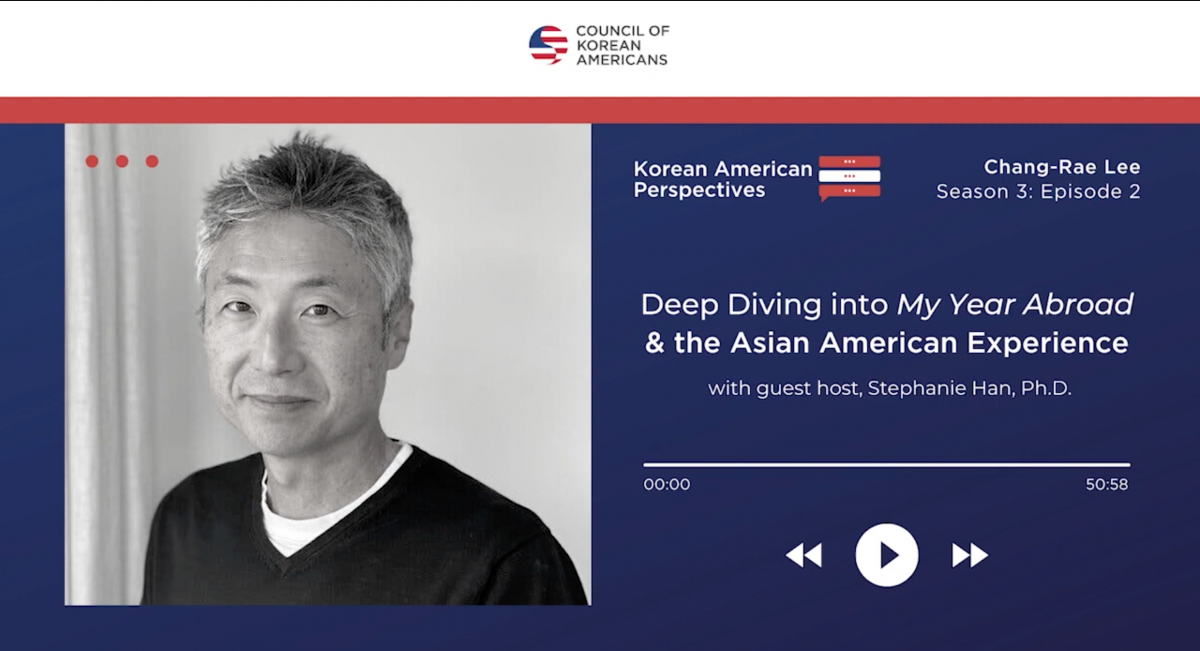
Deep Diving into My Year Abroad and the Asian American Experience with Chang-Rae Lee

Source: Council of Korean Americans Youtube

“Our second episode of season 3 of the Korean American Perspectives Podcast features Chang-Rae Lee, a celebrated Korean American novelist. To speak with him, we have guest host, Stephanie Han, Ph.D. who is an award-winning author, educator, and speaker.

In this episode, Chang-Rae Lee and Dr. Stephanie Han take a deep dive into his latest novel, My Year Abroad. They explore the novel’s themes, its colorful characters, and adventures, as well as how food plays a role in Chang-Rae’s writing. They also connect the novel with the Asian American experience and discuss how identity formation is very particular to each person as well as the myriad of complexities and questions it presents.

Chang-Rae Lee reminds us that it’s important to take risks, journey throughout the world, and ask questions, especially when discovering oneself. “


Categories
Blog Monday Books Reading & Writing

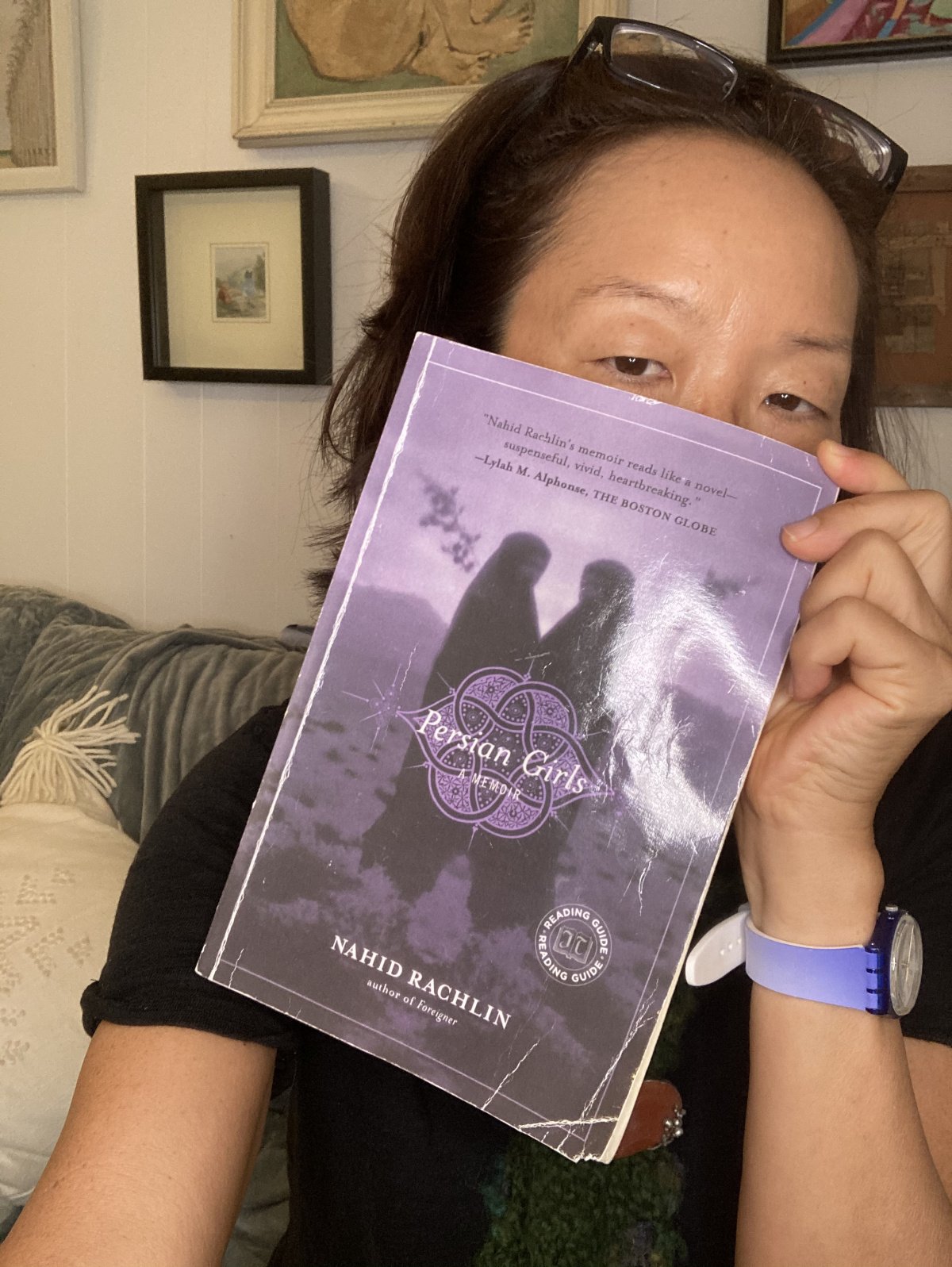
Monday Books No. 20: Persian Girls by Nahid Rachlin

Aloha! For Monday Books I would like to recommend the classic memoir PERSIAN GIRLS by Nahid Rachlin. This memoir is an example of how lyricism and truth deliver transcendence. This is the art of literature at its best, and in its fluidity shows us how writing easily moves across genres. While categorized as memoir, the book gives reads like a novel. This is a masterful piece of writing and I highly recommend it as a necessary read for a range of reading lists: high school through graduate school. It’s that good, relevant, and accessible.

I have assigned this book for many classes and it has resonated with all of my students because this is the story of an individual woman both belonging and at odds with her culture. She loves with compassion and forgiveness, but rises with determination to assert herself into existence. This book was written decades ago. Rachlin still receives letters from women about this book. It’s a CLASSIC. I don’t say that about many books.

Rachlin weaves story and raises questions: How do women negotiate lives in a world where men determine their destinies? (Let’s be realistic here–this is globally…we do not have gender equity). What are the compromises between sisters? How do we long for freedom and comfort? When are we free to express our hearts and humanity? Who defines the terms of motherhood? The role of the wife? The duty of a daughter?

She is one of the first women from Iran to give Western readers a picture of life in the country of her origin and her body of work underscores a 21st century global aesthetic–transnational and polycultural.

I am THRILLED that Rachlin will be visiting my Women’s Creative Writing Workshop on February 27! I am also indebted to her for making a specific difference in my own life. She was the judge for the AWP Grace Paley Prize in 2015 and Swimming in Hong Kong was the sole finalist for this prize. She saw me. Forever grateful and deeply honored.

Categories
Divorce Reading & Writing

Join the Write Your Divorce Story Facebook Group

Aloha,
Please share this group info with women you know. I ask you to reach out to women you know who may be needing this resource. Why? Because women RARELY ask for help.
I am NOT a therapist. But I am someone who has developed a framework for understanding that has worked for me and that has helped other women.
I have decided to post concepts and methods that have been very effective for women facing this challenge — essentially the information from the book in the FB group Write Your Divorce Story.
——-
I began teaching the Write Your Divorce Story workshop as a way to provide women with a practical approach to dealing with the process of divorce. While divorce takes place across all cultures, women continue to experience devastating feelings of grief, inadequacy, or shame as they undergo this traumatic upheaval. There are thousands of resources on the process of getting married, yet few on divorce.
I found only two references in my online search on how to write a divorce story: one from a family attorney’s practice, and another from a religious organization. Women may be unable to ask for help or feel self-conscious about doing so. When I began to offer the workshop, I had many women email or message me across social media in great distress, but often they were too self-conscious to show up, as if to do so would be to admit a further wrongdoing on their part. Some were so overwhelmed that they were unable to carve out the time to attend a single class. I realized then that women needed to be able to privately access information, hence I authored a short book that I will release this year. I wrote it with the hope that women can see that they can author their divorce story, and in so doing, create a new life.
If you are a woman in the process of moving through a divorce or have been divorced and would like to add to this conversation, please feel free to ask and join my FB group WRITE: Your Divorce Story.
.
Categories
Monday Books Poetry Reading & Writing

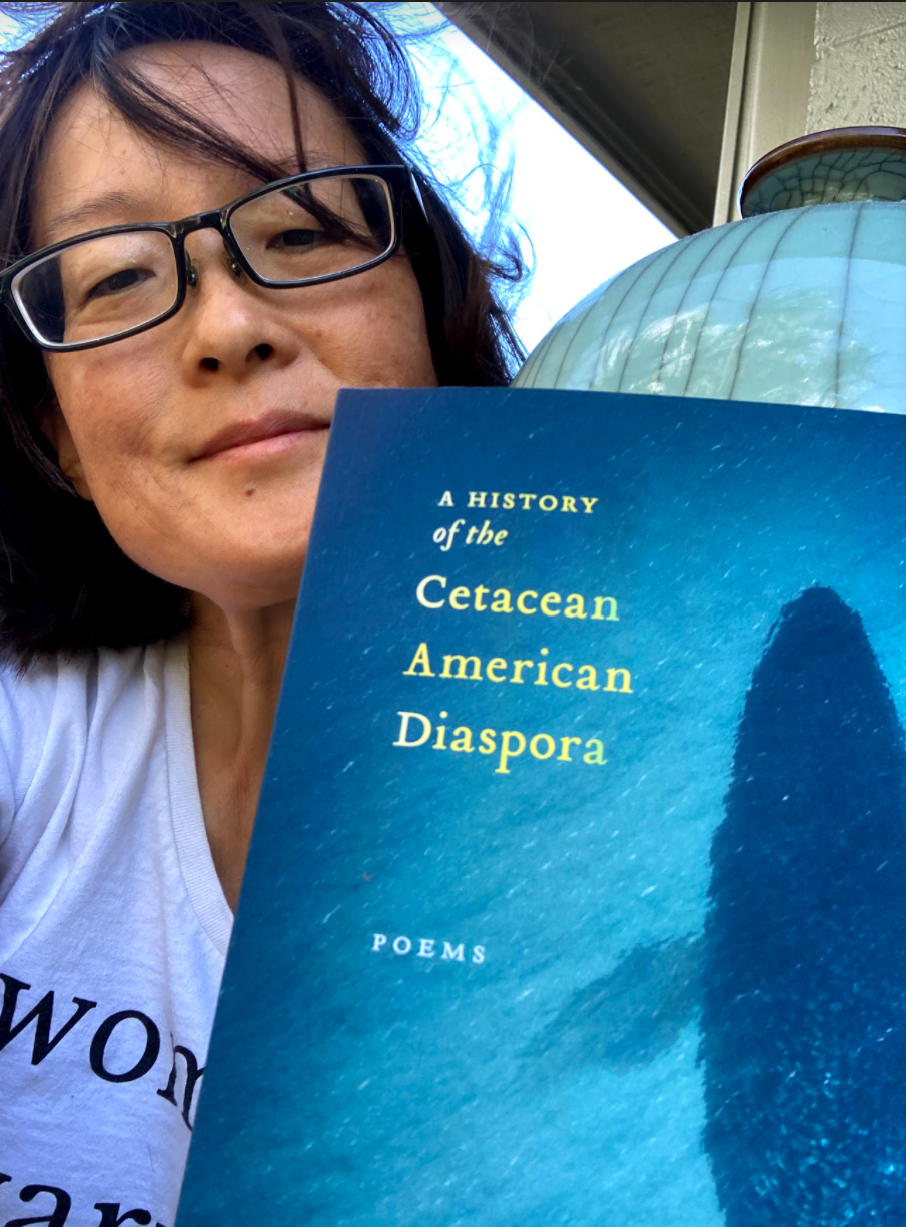
Monday Books No. 19: A History of the Cetacean American Diaspora by Jenna Le

Aloha! It’s time for Monday books and I would like to recommend A History of the Cetacean American Diaspora by Jenna Le. This is a wonderful book of poetry full of texture, light, and feeling. 

Yes, this is a book that even that disinterested non-reading adolescent who sits in the back of your class and is a rather big pain in the neck most of the time, will really enjoy. Yes, Bored Teen Boy entered my class yet again, to the silent reading hour with nothing to read. I had a million things to do. I said PICK A BOOK. ANY BOOK. I think I just plopped the book in front of him. 

Bored Teen Boy liked this book.

THIS IS A MIRACLE BOOK. I’m not sure if Bored Teen Boy read much of the required reading.  Do know that Bored Teen Boy this book and the biography of Eddie Aikau. Reading can happen. And books like this make it happen.